 Image 1 of 2
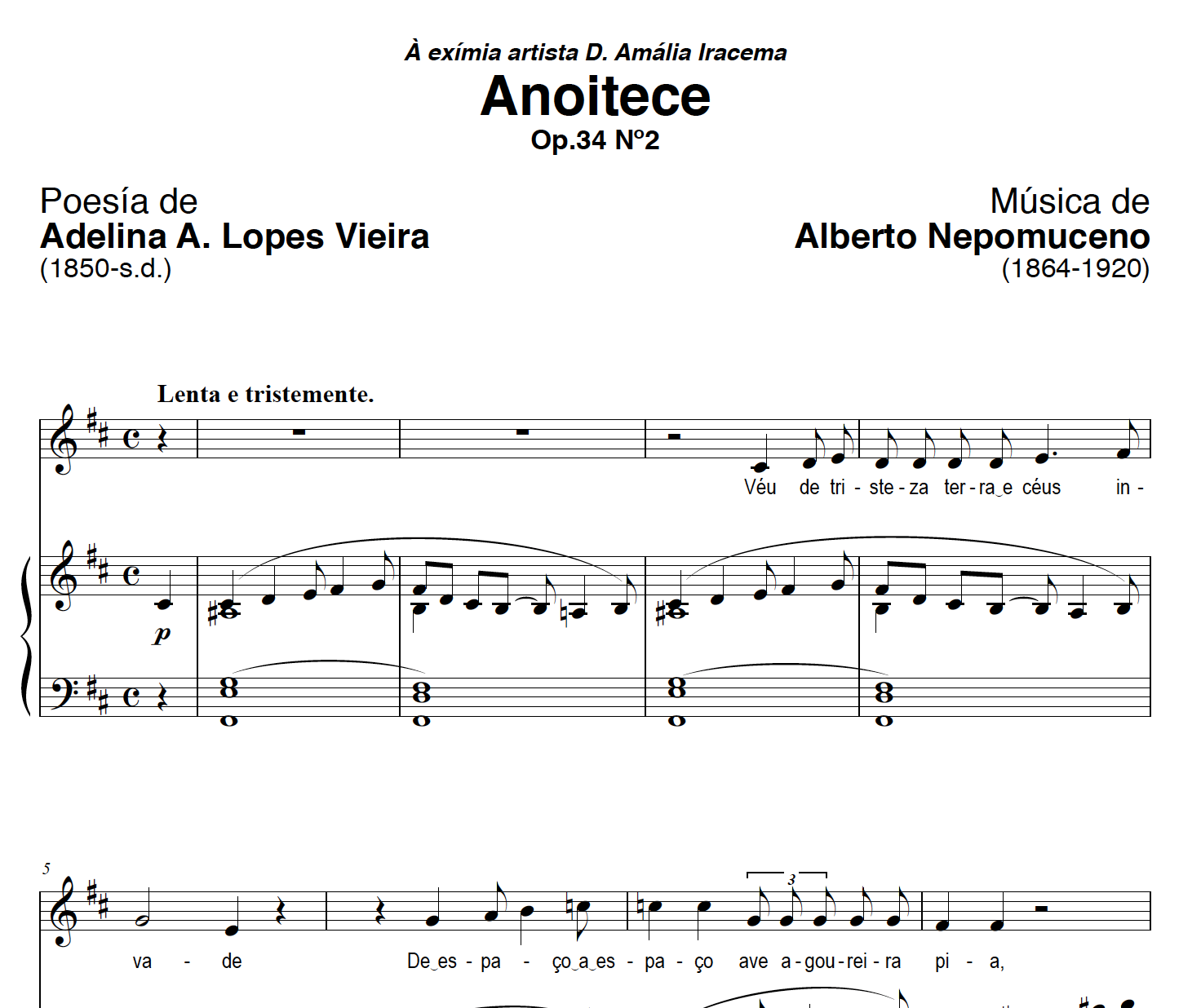 Image 2 of 2
Anoitece (Night Falls), Op. 34, No. 2, is a Brazilian art song for voice and piano by Alberto Nepomuceno (1864–1920), a central figure in Brazilian musical nationalism and an advocate for Portuguese-language art song. The text is by Adelina A. Lopes Vieira, a Portuguese poet whose verses explore the relationship between natural imagery and human emotion.
The poem portrays the arrival of night as a metaphor for melancholy and the passing of time. Darkening skies, the cry of an ominous bird, falling dew, and distant bells create an atmosphere of solitude and uncertainty. The fading sunlight represents the disappearance of hope and youthful illusion, while the recollection of love, glory, and happiness introduces a passionate contrast to the prevailing sadness.
Marked Lenta e tristemente, the song opens with a restrained piano accompaniment and a declamatory vocal line. Chromatic harmonies and increasingly animated triplet figures intensify the central section, culminating in the dramatic Com Paixão passage. The return to the opening material and a quiet perdendosi ending evoke the gradual disappearance of light.
A noitece explores the tension between melancholy and the desire to recover moments of happiness. Listen to a recording: André Vidal, tenor, and Gisele Pires Mota, piano — YouTube.