 Image 1 of 2
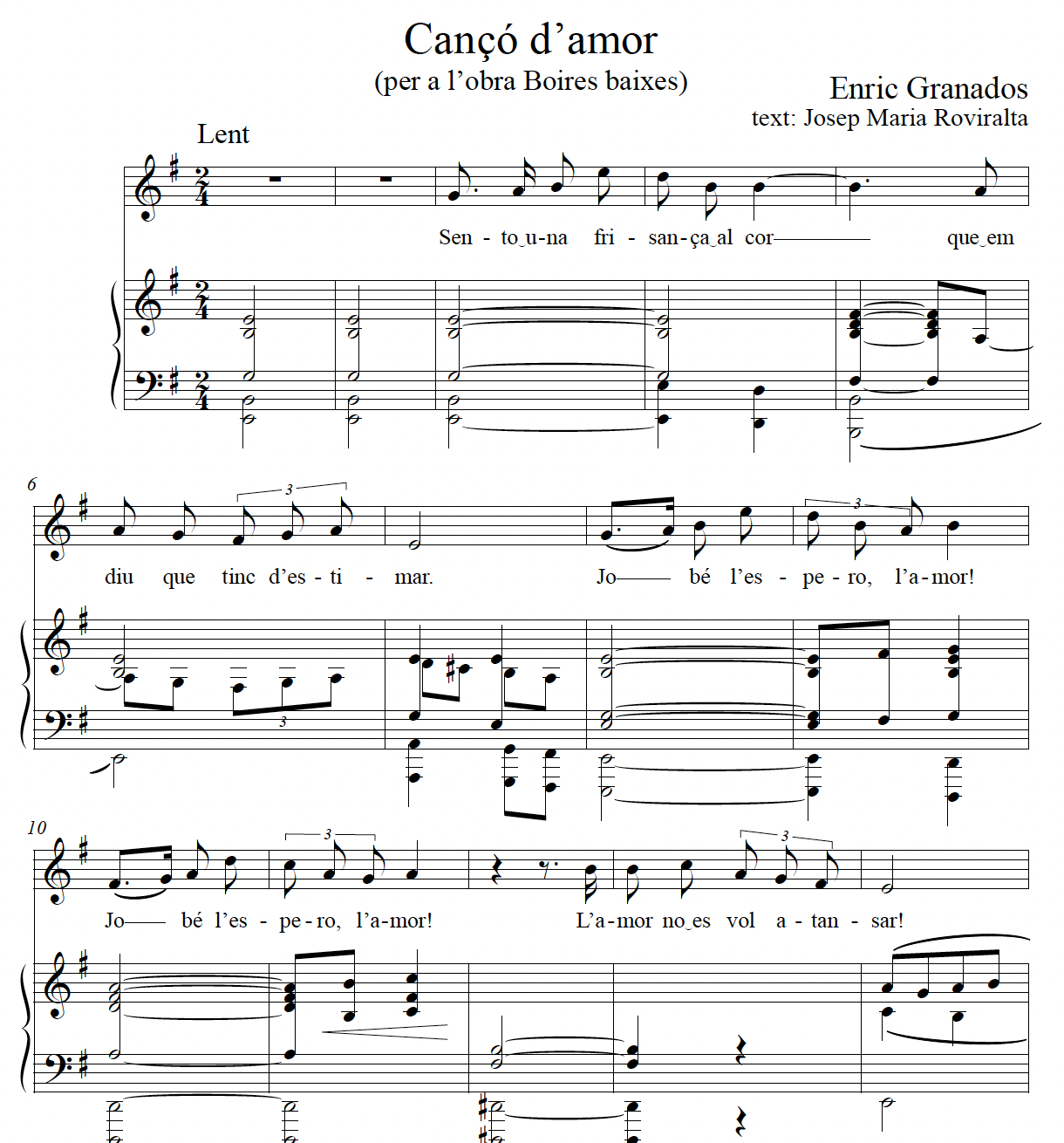 Image 2 of 2
Cançó d’amor (Song of Love) is a Catalan art song for voice and piano by Enric Granados (1867–1916), with poetry by Josep Maria Roviralta (1880–1960). Written for the theatrical work Boires baixes, the song reflects Granados's lyrical style and his contribution to Catalan vocal music.
The poem explores the anticipation of love and the loneliness of unfulfilled affection. Through images of blossoming flowers, birds, and their fragrance, Roviralta contrasts nature's promise of renewal with the speaker's longing for companionship. The repeated questions emphasize the emotional distance between the beauty of the natural world and the absence of a beloved.
Marked Lent, the composition begins in 2/4 meter with a restrained piano introduction. Its expressive vocal melody unfolds over sustained harmonies and chromatic piano figures. An extended instrumental interlude separates the principal poetic sections, while changes of meter and contrasting accompaniment textures support the text's shifting emotions. The song concludes with a quiet piano postlude.
Cançó d’amor combines intimate vocal lyricism with Granados's characteristic harmonic sensitivity, expressing the tension between hope and solitude.