 Image 1 of 2
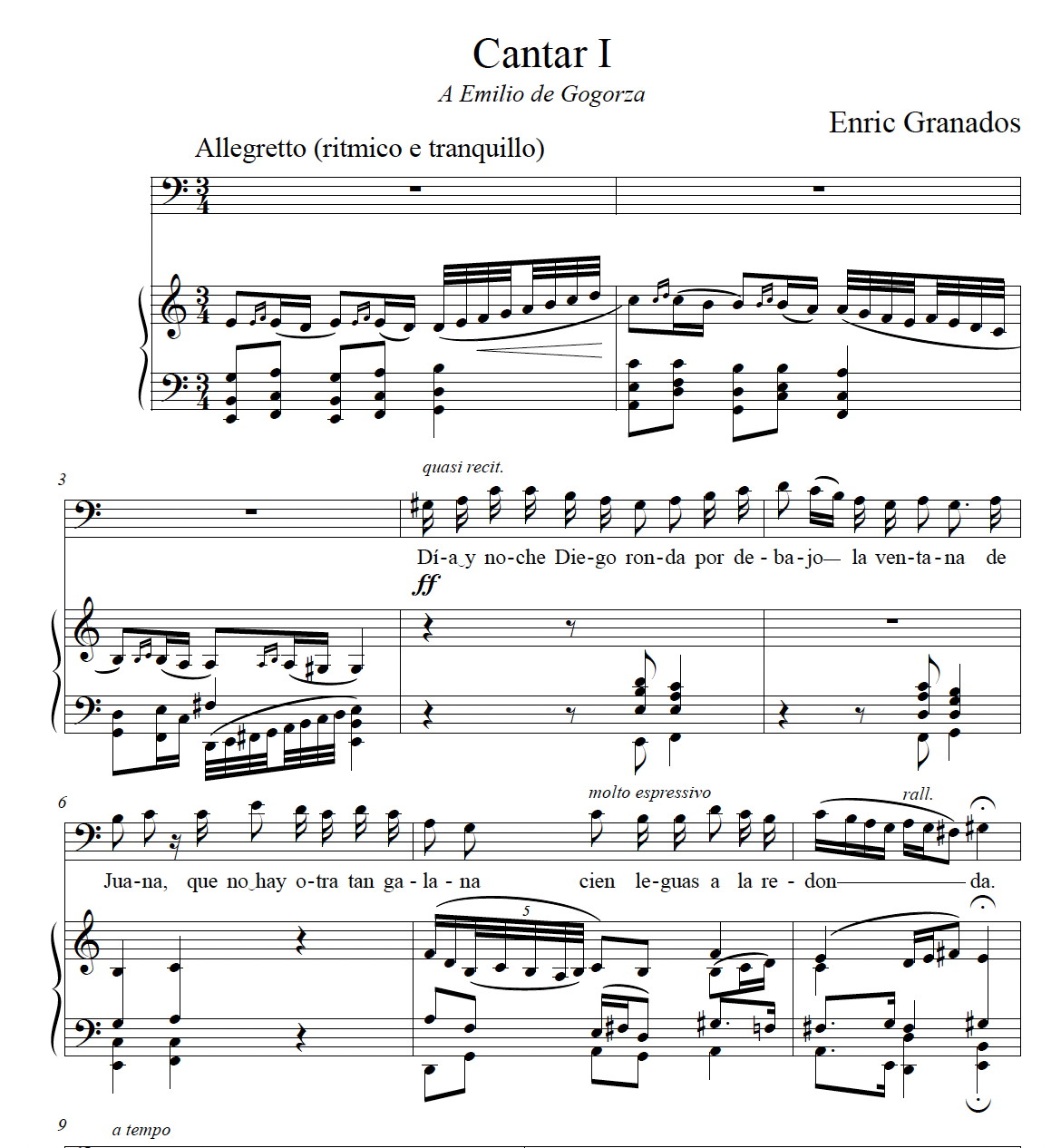 Image 2 of 2
Cantar I (Día y noche Diego ronda) is a Spanish art song for baritone and piano composed in 1914 by Enric Granados (1867–1916), a Catalan pianist and composer whose vocal music draws on Spanish poetic traditions and historical musical styles. Dedicated to the baritone Emilio de Gogorza, the work was also adapted by Granados for cello and piano under the title Madrigal.
The anonymous poem presents a humorous portrait of courtship and romantic rivalry. Diego, Ramiro, and Remigio compete for the attention of Juana, a young woman celebrated throughout her village for her beauty and well aware of her appeal.
Marked Allegretto (ritmico e tranquillo), the composition combines declamatory vocal writing with ornamental piano passages, melodic flourishes, and flexible rhythms. Changes between triple and quadruple meter accommodate the natural inflections of the Spanish text. The return of the opening verses creates a rounded structure, while the contrasting musical gestures emphasize the theatrical character of the narrative.
Listen to a recording: Juan Díaz Saá, baritone, and Aurelio Viribay, piano — YouTube.
Spotify: David Menéndez, baritone, and Rubén Fernández Aguirre, piano.