 Image 1 of 2
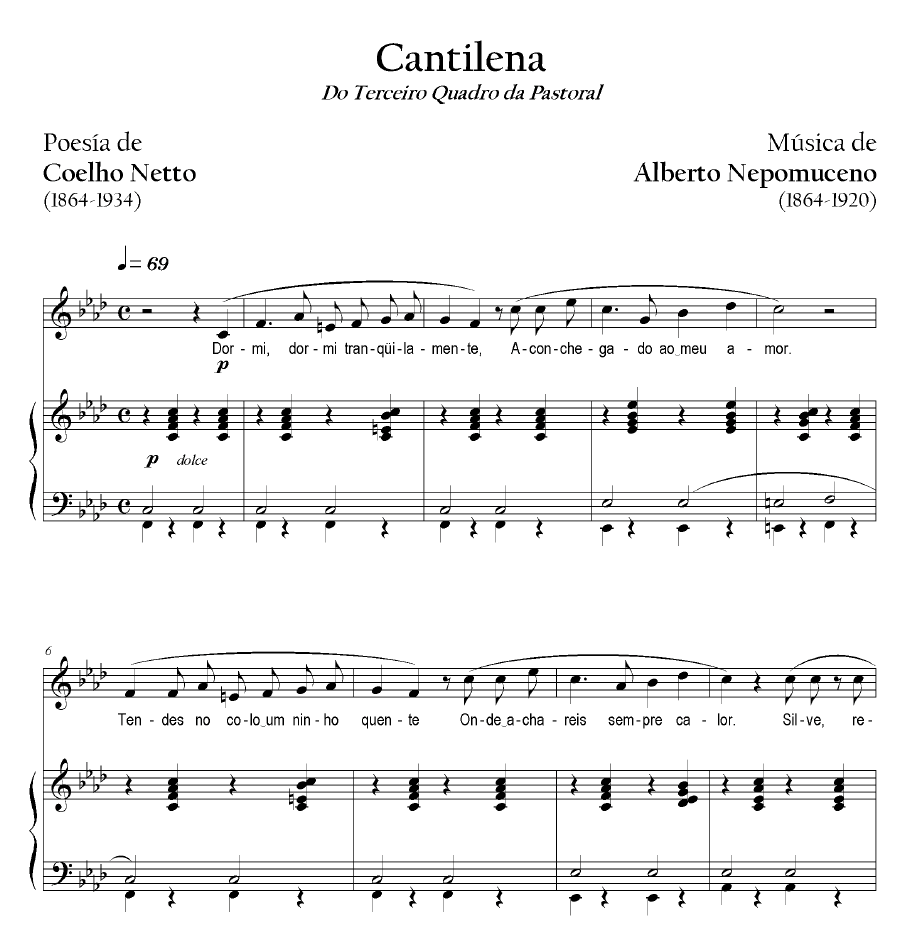 Image 2 of 2
Cantilena is a Brazilian art song for voice and piano by Alberto Nepomuceno (1864–1920), a pioneer of Brazilian musical nationalism and an advocate for Portuguese-language vocal music. Composed in 1902, the song belongs to the third scene of Pastoral, with a text by Coelho Netto (1864–1934), a Brazilian novelist, poet, and playwright whose literary production encompasses historical, pastoral, and symbolic subjects.
The poem takes the form of a lullaby, contrasting the warmth of love and protection with the coldness of the surrounding landscape. Images of a nest, snow, wind, rivers, mountains, and fire convey tenderness and emotional intimacy. Within the Christmas context of Pastoral, the text also acquires a spiritual dimension.
Written in A-flat major, the song features a lyrical vocal melody, predominantly syllabic writing, and a gently pulsating chordal accompaniment. Its strophic structure, chromatic inflections, and delicate piano interludes reinforce the intimate character of the poetry. An instrumental postlude marked morrendo brings the composition to a peaceful conclusion.
Listen to a recording: Joyce Coutinho — Cantilena, Alberto Nepomuceno (YouTube).