 Image 1 of 2
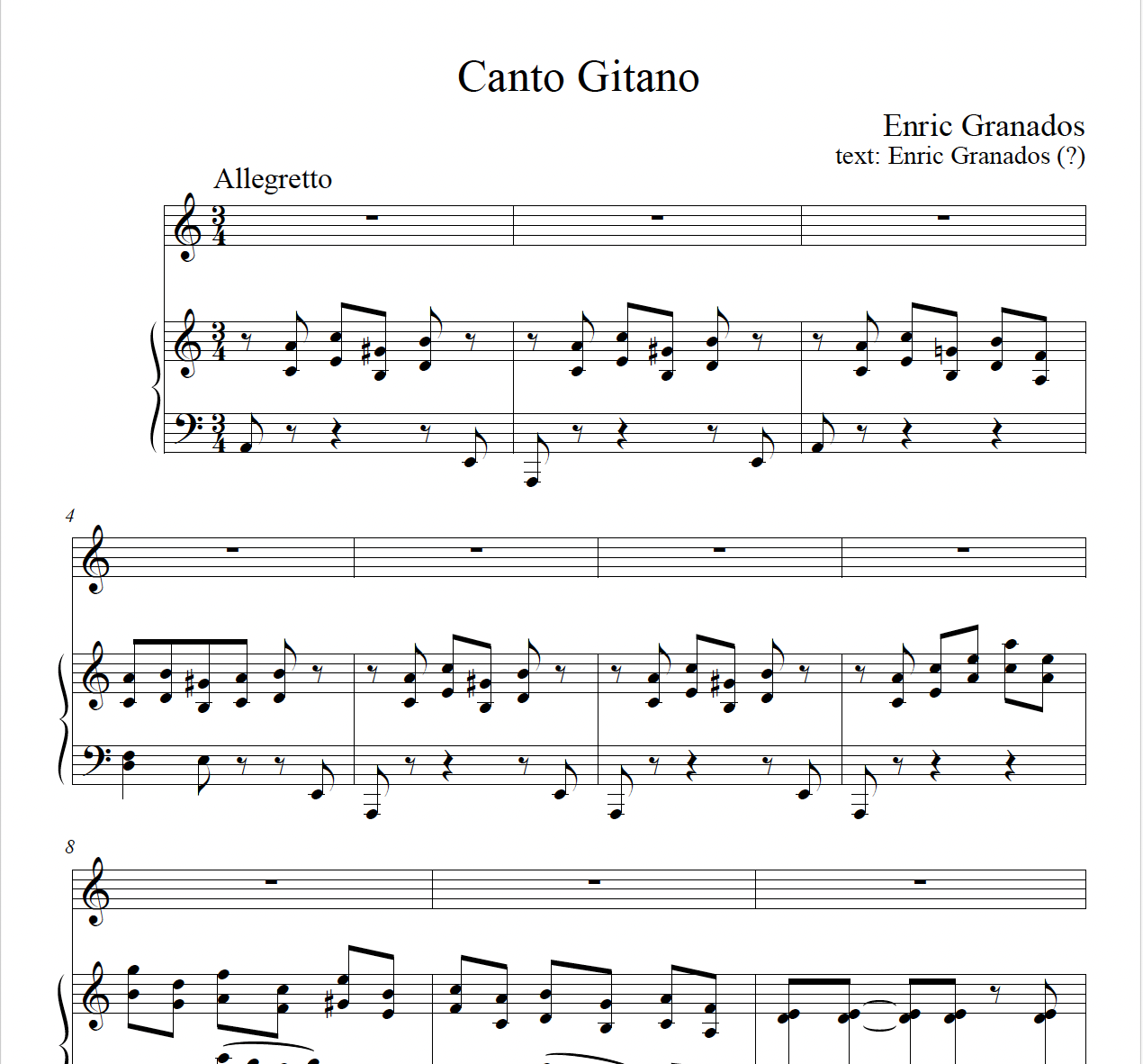 Image 2 of 2
Canto gitano (Gypsy Song) is a Spanish art song for voice and piano by Enric Granados (1867–1916), the Catalan composer and pianist known for his expressive melodies and his engagement with Spanish musical traditions. The poetic text is tentatively attributed to Granados himself.
The song draws on the expressive language of Spanish copla, portraying a lover's distress at the loss of his beloved. Its colloquial expressions and repeated appeals to his mother convey longing, jealousy, and emotional suffering.
Marked Allegretto and written in 3/4 meter, the composition opens with an extended piano introduction featuring syncopated rhythms, repeated figures, and chromatic inflections. The vocal section, labeled Copla, presents two stanzas beneath the same melody, combining syllabic declamation with expressive melodic gestures. The piano accompaniment maintains a dance-like rhythmic character, while the concluding section develops the opening material and includes sustained vocal exclamations of “¡Ay!”
Canto gitano reflects Granados's interest in Spanish popular musical idioms, combining rhythmic vitality with the expressive character of traditional song.