 Image 1 of 2
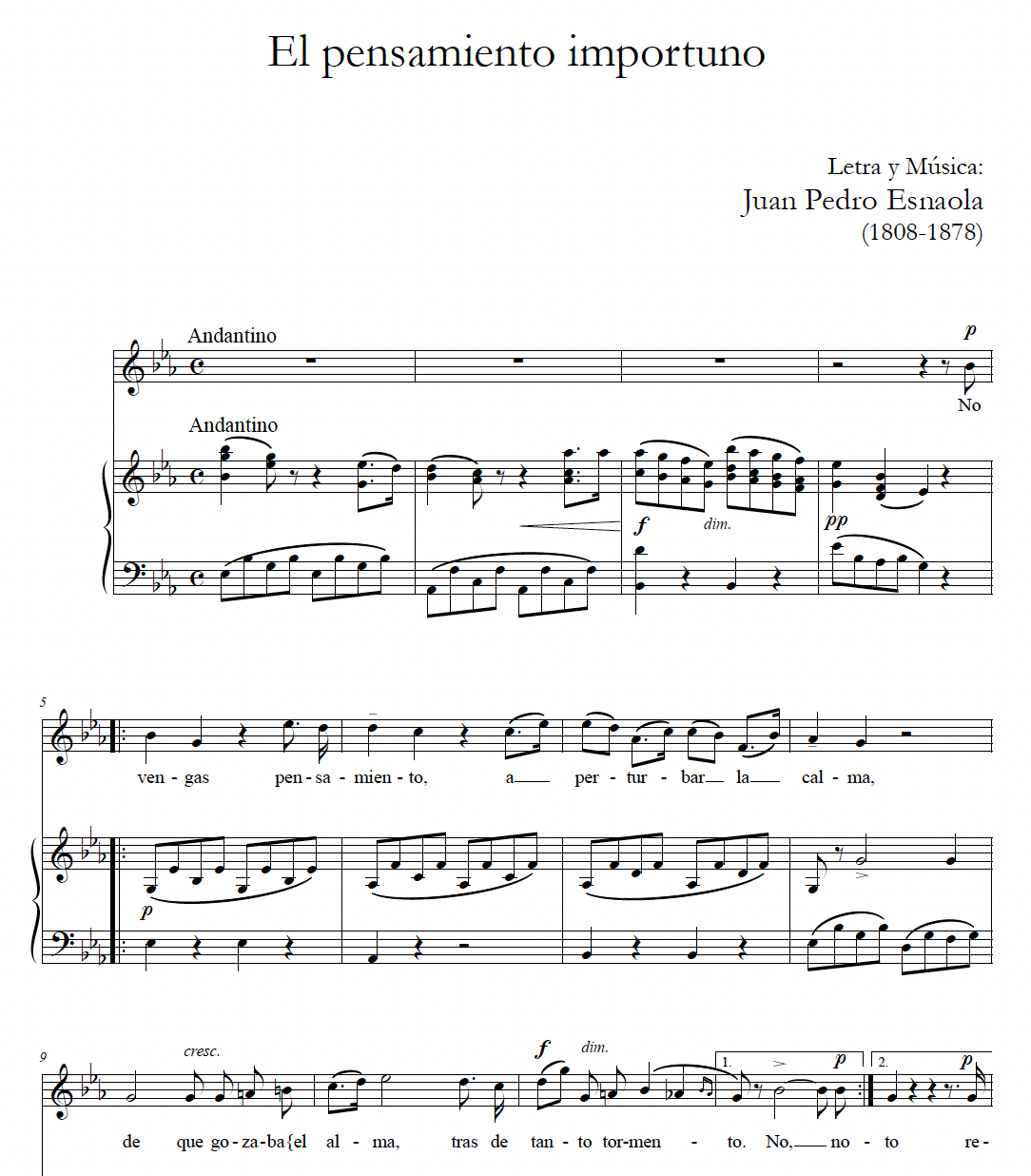 Image 2 of 2
El pensamiento importuno (The Unwelcome Thought) is an Argentinian art song for voice and piano, with text and music by Juan Pedro Esnaola (1808–1878), a pioneer of nineteenth-century Argentinian art music and a central figure in the development of the country's art song tradition.
The poem explores the conflict between memory and emotional tranquility. The speaker addresses an unwelcome thought that threatens to disturb a recently recovered sense of peace, recalling the happiness of a past love. Nostalgia, emotional suffering, and the persistence of romantic memories reflect the sensibility of nineteenth-century Romanticism.
Marked Andantino and written in E-flat major, the composition combines lyrical vocal phrases with ornamental passages, chromatic inflections, and expressive dynamic contrasts. The piano alternates between broken-chord patterns and chordal textures, supporting the shifting emotions of the poem. The return of the introductory piano material provides a sense of formal unity.