 Image 1 of 2
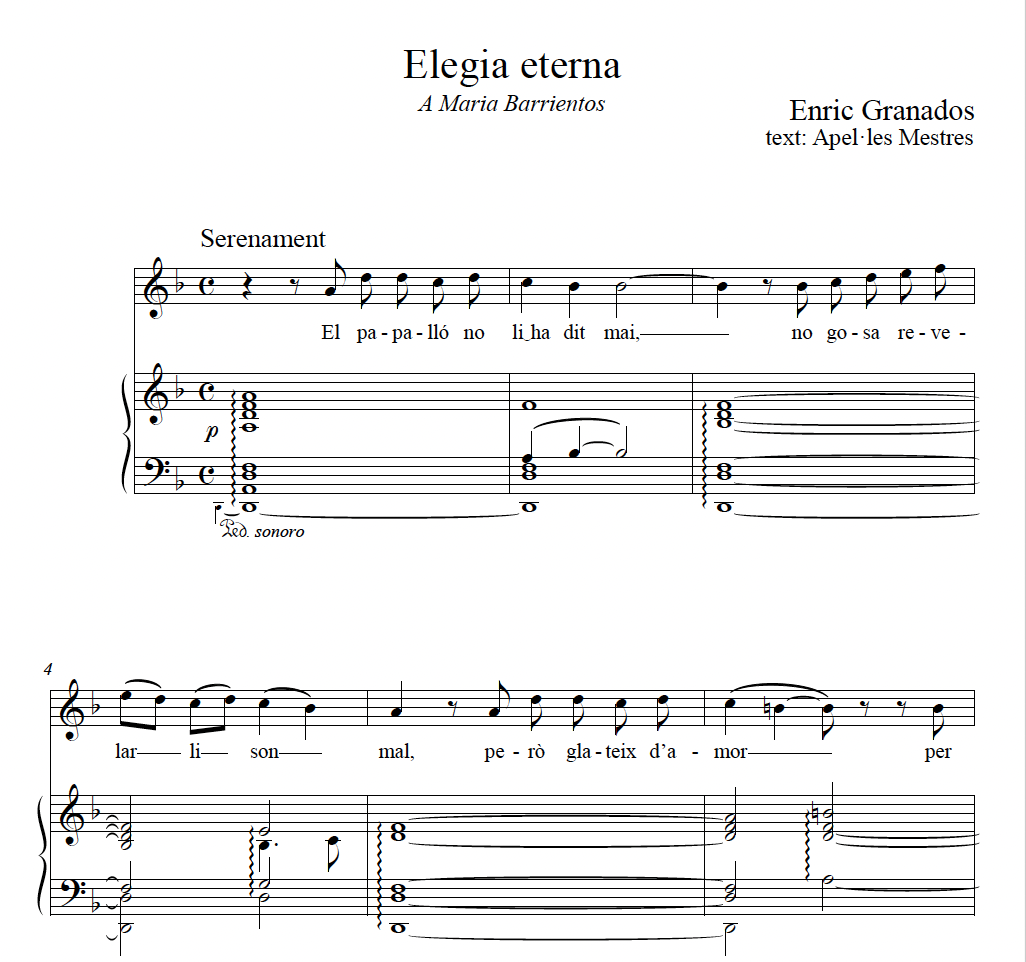 Image 2 of 2
Elegia eterna (Eternal Elegy) is a Catalan art song for voice and piano by Enric Granados (1867–1916), setting poetry by Apel·les Mestres (1854–1936). The song is dedicated to the Catalan soprano Maria Barrientos.
Mestres, a poet, illustrator, and representative of Catalan Modernisme, frequently used nature to explore human emotions. In Elegia eterna, he tells the tragic story of a butterfly secretly in love with a rose, a morning breeze in love with the mist, and the mist devoted to a river. Their unrequited affections culminate in the butterfly's death, creating an allegory of longing, loss, and unattainable love.
Marked Serenament, Granados's setting combines lyrical vocal phrases with sustained piano harmonies and chromatic inflections. Contrasting passages marked dolorós and spianato, molto espressivo intensify the emotional narrative. An extended wordless vocalise and expressive piano interludes contribute to the elegiac atmosphere.
The composition illustrates Granados's sensitivity to poetic imagery and his ability to unite vocal lyricism with expressive piano writing.