 Image 1 of 2
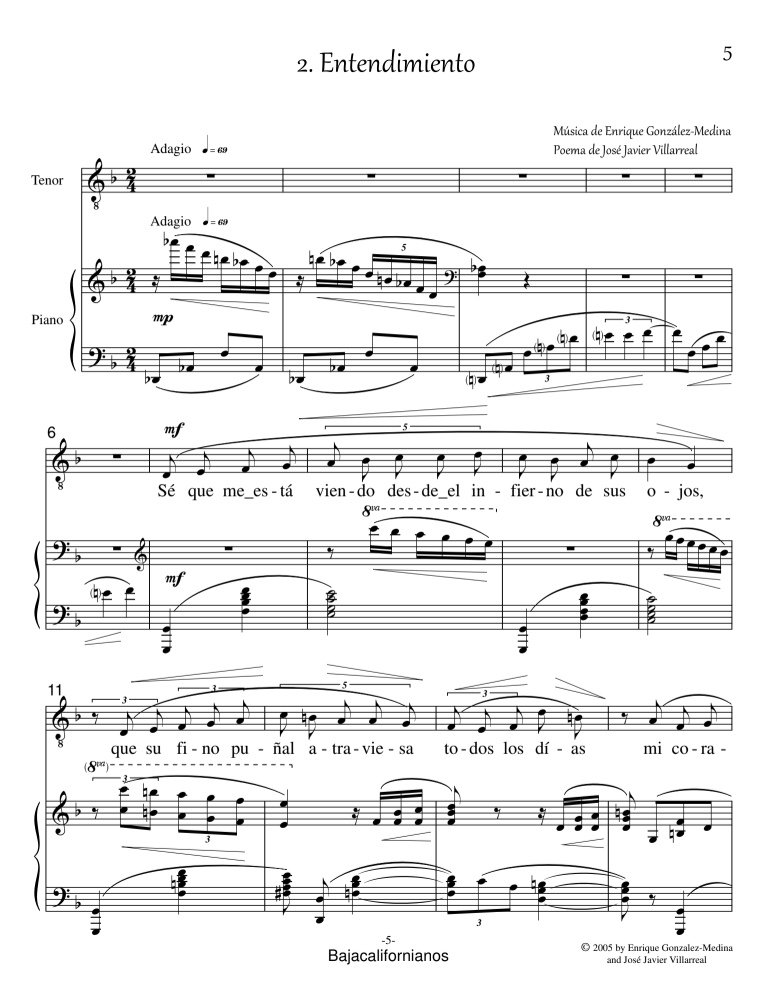 Image 2 of 2
Entendimiento
Entendimiento is a Mexican art song for tenor and piano composed by Enrique González-Medina, with a Spanish-language poem by José Javier Villarreal. Written in 2005, it is the second song in the cycle Bajacalifornianos.
The poem introduces an unnamed presence through images of danger, desire, violence, fear, and everyday intimacy. Its meaning gradually shifts: what first appears threatening becomes inseparable from the speaker’s private life. The music follows this psychological journey through chromatic harmonies, flexible vocal phrases, sudden changes of color, and strong contrasts between tension and stillness.
The song begins Adagio, with an active and independent piano part built from rapid figures, irregular rhythmic groupings, and changes across the instrument’s registers. The vocal writing alternates between lyrical lines and more angular, speech-like gestures. In the final section, marked Lento and tranquillamente, the musical atmosphere becomes quieter and more reflective, leading to an intimate close.
Written specifically for tenor, the piece is suitable for a high male voice. Its chromatic language, rhythmic detail, and close coordination between singer and pianist make it best suited to advanced performers.
Instrumentation: Tenor and piano
Language: Spanish
Vocal range: D♭3–F♯4 (sounding pitch)
Notated range: D♭4–F♯5 (octave-transposing tenor notation)
Composer: Enrique González-Medina
Poet: José Javier Villarreal
Country: Mexico
Genre: Mexican art song
Entendimiento
Entendimiento is a Mexican art song for tenor and piano composed by Enrique González-Medina, with a Spanish-language poem by José Javier Villarreal. Written in 2005, it is the second song in the cycle Bajacalifornianos.
The poem introduces an unnamed presence through images of danger, desire, violence, fear, and everyday intimacy. Its meaning gradually shifts: what first appears threatening becomes inseparable from the speaker’s private life. The music follows this psychological journey through chromatic harmonies, flexible vocal phrases, sudden changes of color, and strong contrasts between tension and stillness.
The song begins Adagio, with an active and independent piano part built from rapid figures, irregular rhythmic groupings, and changes across the instrument’s registers. The vocal writing alternates between lyrical lines and more angular, speech-like gestures. In the final section, marked Lento and tranquillamente, the musical atmosphere becomes quieter and more reflective, leading to an intimate close.
Written specifically for tenor, the piece is suitable for a high male voice. Its chromatic language, rhythmic detail, and close coordination between singer and pianist make it best suited to advanced performers.
Instrumentation: Tenor and piano
Language: Spanish
Vocal range: D♭3–F♯4 (sounding pitch)
Notated range: D♭4–F♯5 (octave-transposing tenor notation)
Composer: Enrique González-Medina
Poet: José Javier Villarreal
Country: Mexico
Genre: Mexican art song