
 Image 1 of 2
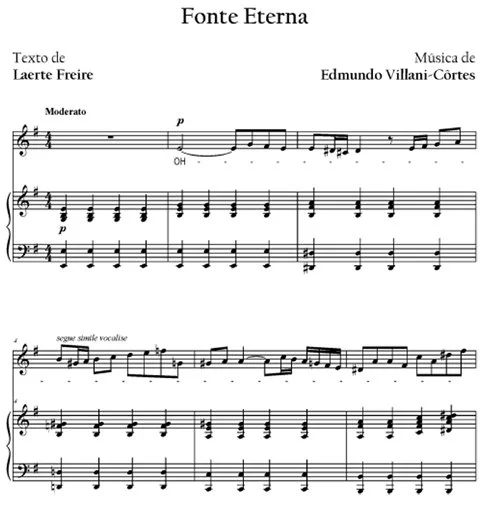 Image 2 of 2
Fonte Eterna (Eternal Spring) is a Brazilian art song for voice and piano by Edmundo Villani-Côrtes (b. 1930), with poetry by Laerte Freire. A composer, pianist, arranger, and conductor, Villani-Côrtes is an important figure in Brazilian concert music. His compositions bring together elements of Brazilian popular and traditional music with classical forms, jazz-influenced harmonies, and contemporary compositional techniques.
The poem explores memory, longing, love, and the search for artistic inspiration. Through images of a small bird seeking freedom, star-filled nights, and the discovery of an eternal spring, the poetic voice connects the experience of love with the origins of music and poetry. The recurring image of the fonte eterna becomes a symbol of emotional renewal and creative inspiration. The final verses suggest that this source of inspiration is ultimately found in the beloved.
Marked Moderato, the composition opens in 4/4 meter with a piano accompaniment built on repeated chords and a steady rhythmic pulse. The voice enters with an extended wordless vocalise on “Oh,” characterized by flowing melodic figures, chromatic inflections, and changes of register. This opening passage establishes the song's lyrical character before the introduction of the poetic text.
The principal vocal section begins with the words “Oh! quanta lembrança vem nesta canção,” presenting a predominantly syllabic melody supported by changing piano harmonies. The musical writing alternates between flowing melodic phrases and more sustained passages, while chromatic movement and shifts in harmonic color contribute to the expressive development.
In the central section, the piano accompaniment becomes more rhythmically active, with repeated chordal patterns and changes in texture supporting the poem's images of starry nights, memory, and the search for melody and poetry. The vocal line expands into longer phrases, combining lyrical expression with moments of increased intensity.
Toward the conclusion, the opening wordless vocalise returns, creating a connection with the song's introduction. The final vocal phrases, “fonte eterna que busquei e só achei em teu amor,” bring the poetic narrative to its resolution, followed by a quiet instrumental conclusion.
Spanning approximately 52 measures, Fonte Eterna combines lyrical vocal writing, chromatic harmony, wordless vocalise, and contrasting piano textures. Its expressive character reflects the relationship between memory, artistic creation, and love in Laerte Freire's poetry.