 Image 1 of 2
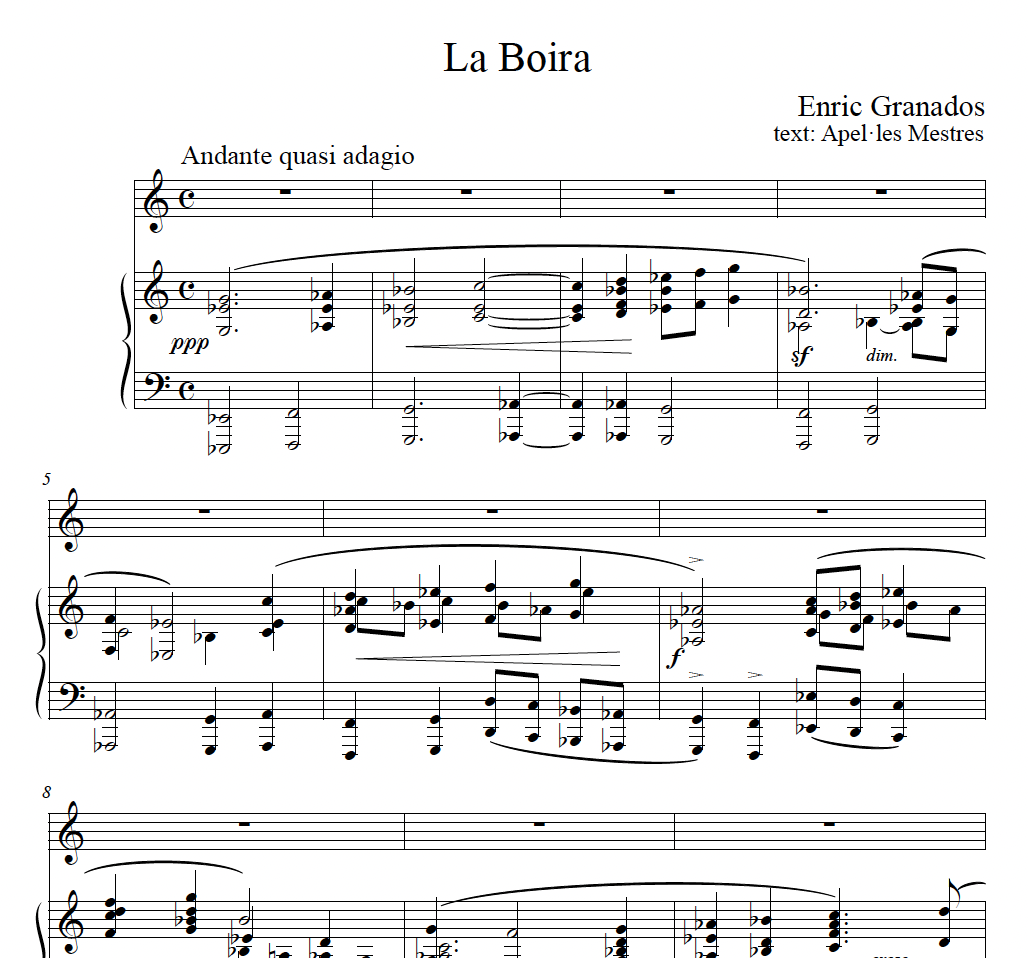 Image 2 of 2
La Boira (The Mist) is an art song for voice and piano by Enric Granados (1867–1916), with poetry by Apel·les Mestres (1854–1936). Composed in Barcelona on February 1, 1900, the song belongs to the Catalan vocal repertoire of the early twentieth century.
Granados was a Spanish composer and pianist born in Lleida, Catalonia, and a central figure in Spanish musical life around the turn of the twentieth century. Although internationally recognized for his piano works, particularly Goyescas, he also contributed to the development of Spanish and Catalan art song. His vocal music demonstrates a close relationship between poetic expression, harmonic color, and piano writing.
The poet Apel·les Mestres was a Catalan writer, illustrator, and artist associated with the cultural environment of Catalan Modernisme. His poetry frequently draws on nature, symbolism, and the relationship between the natural world and human experience. In La Boira, he presents a solitary hermit praying on a barren rock as mist rises from the valley. The mist gradually takes on the form of a seductive serpent, suggesting temptation and spiritual struggle. As the hermit prays with increasing intensity, the sun breaks through and disperses the mist. The poem contrasts darkness and light, temptation and faith, through the transformation of the landscape.
Granados translates this dramatic imagery into a composition with contrasting musical sections. The opening, marked Andante quasi adagio, begins with an extended piano introduction characterized by sustained harmonies, chromatic movement, and shifting textures. The voice enters with a restrained, predominantly syllabic melody describing the hermit and his desolate surroundings.
A contrasting central section introduces rapid, continuous piano figurations that evoke the rising and swirling movement of the mist. Chromatic passages, changing registers, and increasingly active vocal writing accompany the poem's transformation of the mist into a serpentine figure. The piano assumes a prominent descriptive role, creating a sense of movement and instability.
The following section, marked Poco allegro in 6/8 meter, intensifies the drama as the hermit senses temptation and responds through prayer. Rhythmic accents and more animated accompaniment contribute to the growing tension. The return of Andante quasi adagio accompanies the final poetic image: the sun appears and dissolves the mist.
Spanning approximately 70 measures, La Boira combines chromatic harmony, expressive vocal declamation, and descriptive piano writing. Its changing musical textures reflect the symbolic narrative of Mestres's poem, making it a representative example of the relationship between poetry, nature, and musical expression in Catalan art song.