 Image 1 of 2
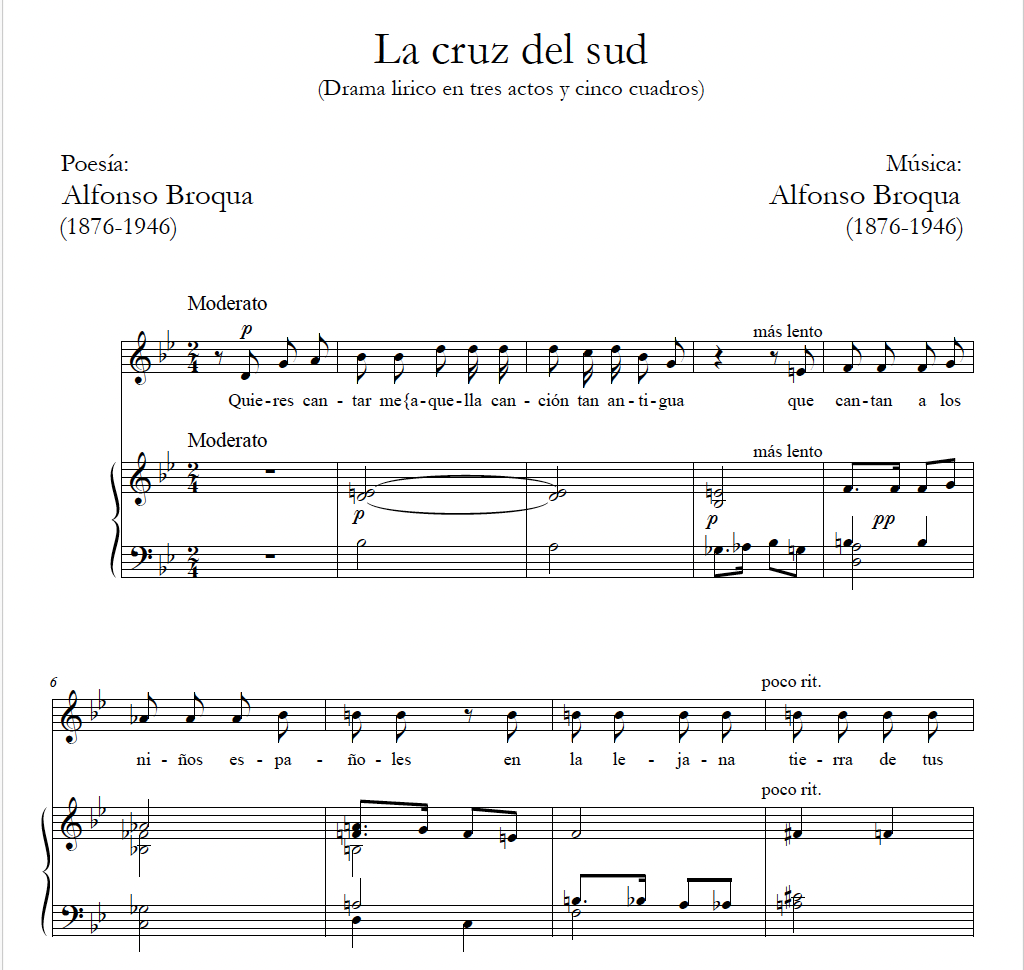 Image 2 of 2
La cruz del sud (The Southern Cross) is a vocal excerpt from the lyrical drama in three acts and five scenes by Alfonso Broqua (1876–1946), a representative of Uruguayan musical nationalism. Trained at the Schola Cantorum in Paris, Broqua incorporated European compositional techniques and Latin American musical traditions into his works. He also wrote the libretto for this drama, which explores the encounter between Hispanic and Indigenous cultures during the Spanish conquest.
The excerpt incorporates a traditional Spanish lullaby, Arrorró mi niño, evoking childhood, tenderness, cultural memory, and the distant homeland of the speaker's ancestors.
The composition opens with a recitative-like passage marked Moderato, followed by a Larghetto section in B major. The lyrical vocal melody is supported by a rocking piano accompaniment, delicate chromatic harmonies, and soft dynamics. Wordless vocalises and recurring triplet figures reinforce the intimate character of the lullaby, bringing the piece to a quiet conclusion.