 Image 1 of 2
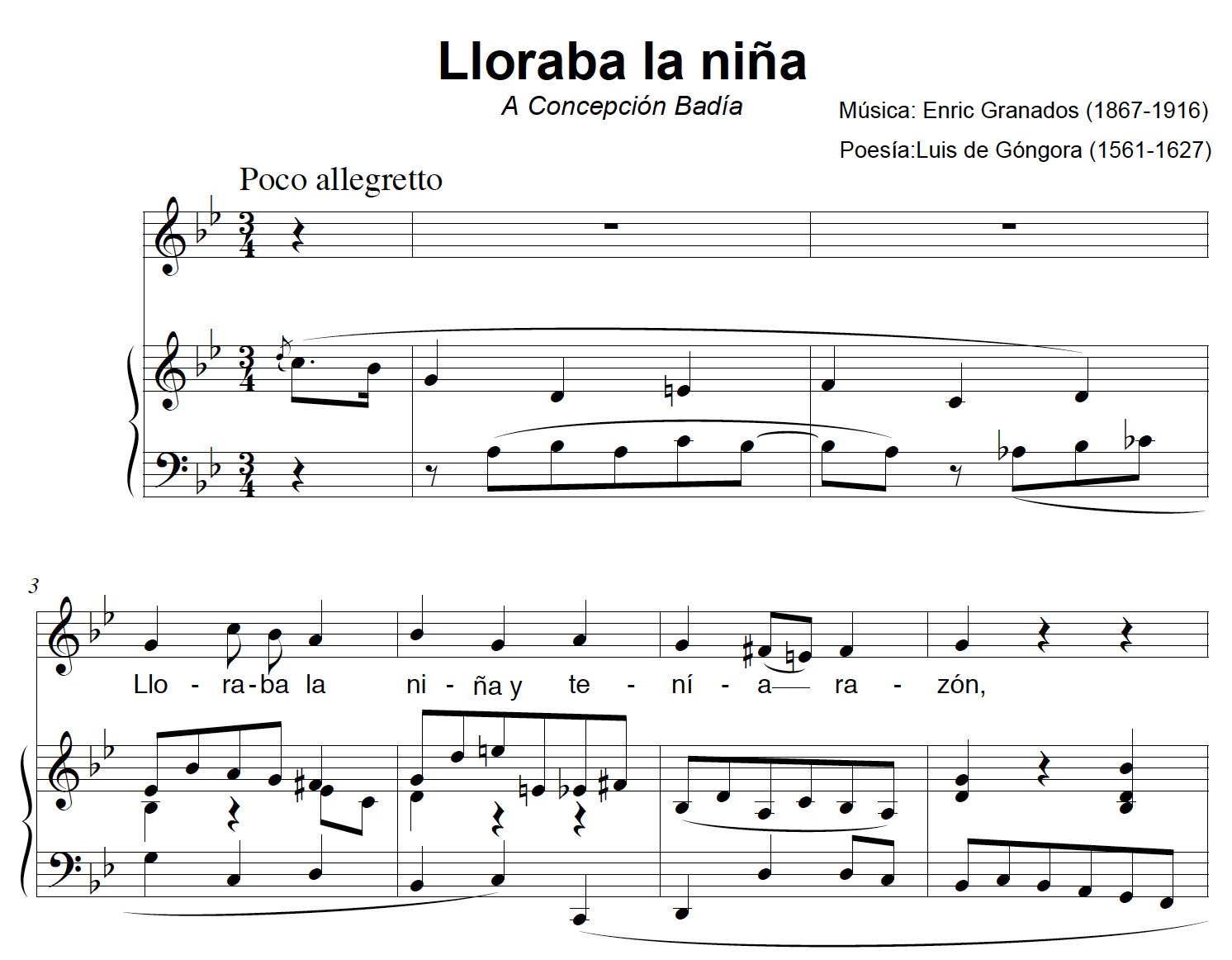 Image 2 of 2
Lloraba la niña (The Young Girl Wept) is a Spanish art song for voice and piano by Enric Granados (1867–1916), setting poetry by Luis de Góngora (1561–1627), one of the major poets of the Spanish Golden Age. The song is dedicated to the Catalan soprano Concepció Badia.
The poem portrays a young woman grieving the absence of an unfaithful lover. Góngora explores abandonment, memory, and emotional suffering through the contrast between youthful innocence and the pain of lost love.
Marked Poco allegretto and written in 3/4 meter, the composition opens with a piano introduction featuring flowing melodic figures and chromatic harmonies. The predominantly syllabic vocal writing follows the natural inflections of the Spanish text. A contrasting passage marked molto espr. doloroso intensifies the expression of grief, while the recurring melodic material provides structural unity. The song concludes with an appeal to the heart, emphasizing the sorrow expressed throughout the poem.
Lloraba la niña reflects Granados's sensitivity to historical Spanish poetry and his expressive approach to vocal composition. Listen to Carmen Bustamante and Manuel García-Morante — Spotify