 Image 1 of 2
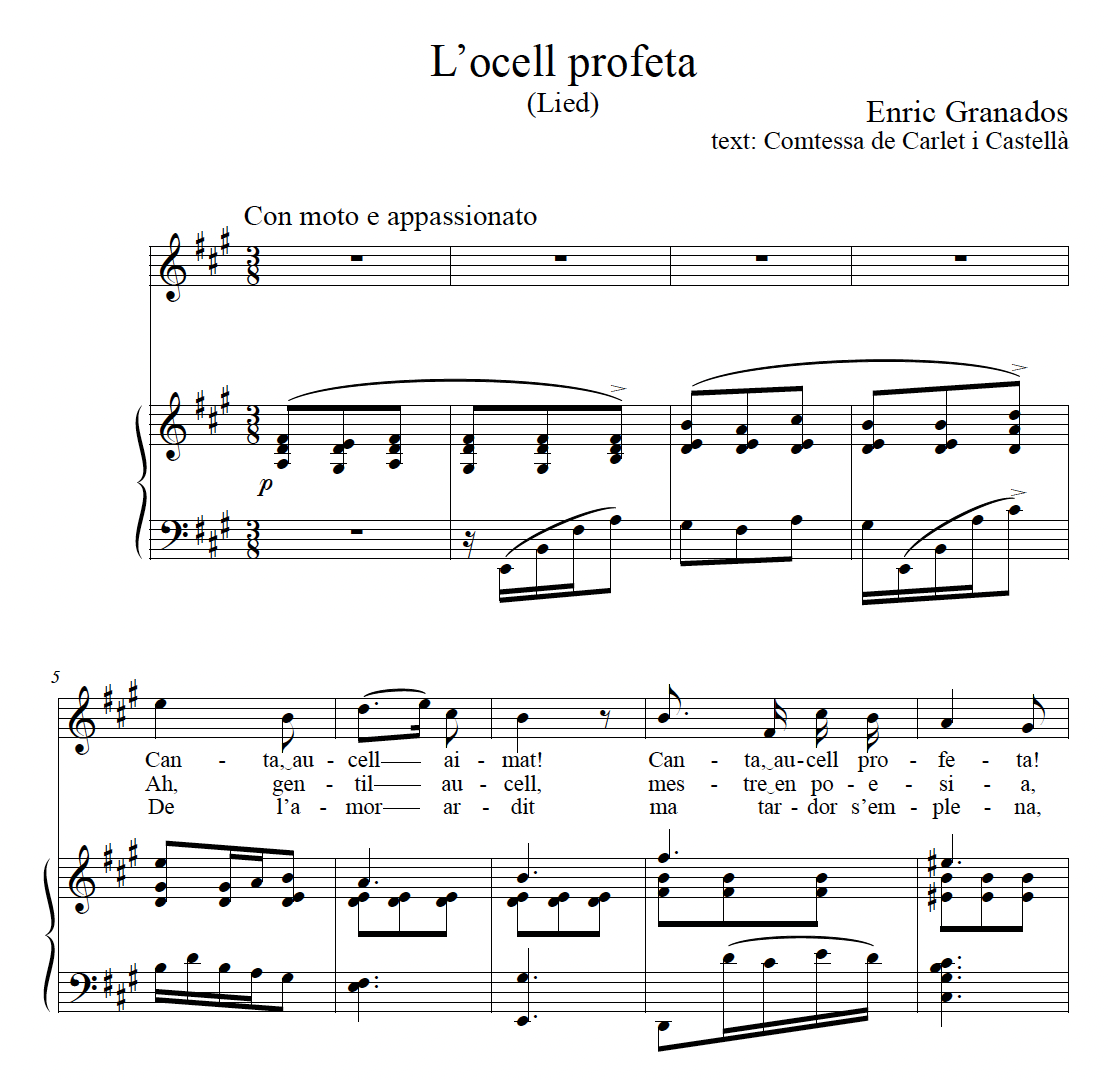 Image 2 of 2
L’ocell profeta (The Prophetic Bird) is a Catalan art song for voice and piano by Enric Granados (1867–1916), setting poetry by the Comtessa de Carlet i Castellà. The composition belongs to the Catalan vocal repertoire associated with the cultural and artistic environment of the late nineteenth and early twentieth centuries.
Born in Lleida, Catalonia, Granados was a composer, pianist, and influential figure in Spanish music. Best known internationally for his piano works, particularly Goyescas, he also composed vocal music that reflects his sensitivity to poetic language, melodic expression, and the expressive possibilities of the piano.
The poem addresses a beloved bird as a messenger of love, poetry, and emotional renewal. Its song transforms the surrounding atmosphere, bringing tenderness to the night and announcing the arrival of new love. The bird becomes a symbol of artistic inspiration and hope, carrying its melody through darkness and awakening feelings of affection and anticipation. The recurring invitation to sing gives the poem a celebratory character, while references to night, longing, and dawn connect the natural world with human emotion.
Marked Con moto e appassionato and written primarily in 3/8 meter, the composition begins with a four-measure piano introduction. The accompaniment establishes a flowing rhythmic pattern through repeated chords, moving bass figures, and expressive harmonic changes. The voice enters with the invocation “Canta, aucell aimat!” (Sing, beloved bird!), presenting a lyrical melody characterized by short, predominantly syllabic phrases.
The opening section develops through changing harmonies, chromatic inflections, and dynamic contrasts. The piano maintains an active role, alternating chordal textures with melodic figures that support the vocal line. The score presents three stanzas of poetry beneath the same musical material, establishing a strophic relationship between text and music.
A contrasting Presto passage in 2/4 introduces rapid piano figuration, followed by a brief vocal transition marked a tempo un poco lento e molto espressivo. The subsequent section, Appassionato un poco mosso, returns to 3/8 and develops the repeated invitation to sing through more animated vocal writing and increasingly active piano textures.
The song concludes with a piano coda marked Un poco lento, in which flowing arpeggiated figures gradually give way to sustained harmonies and a quiet final cadence.
Spanning approximately 40 measures, L’ocell profeta combines lyrical vocal writing, rhythmic vitality, chromatic harmony, and contrasting tempo sections. Its expressive character reflects the poem's celebration of song as a source of love, inspiration, and renewal.