 Image 1 of 2
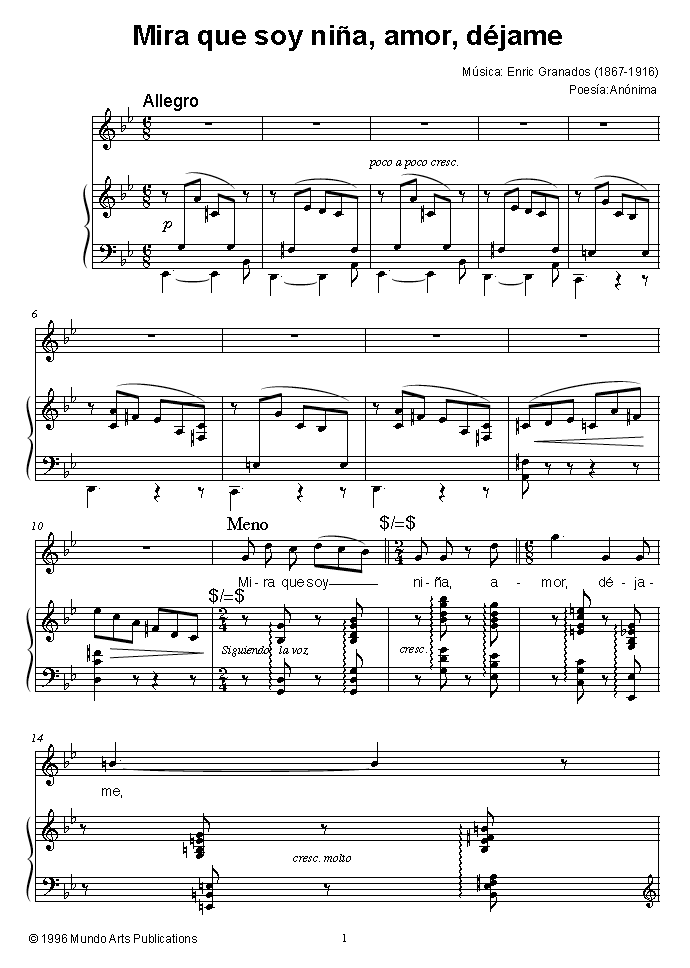 Image 2 of 2
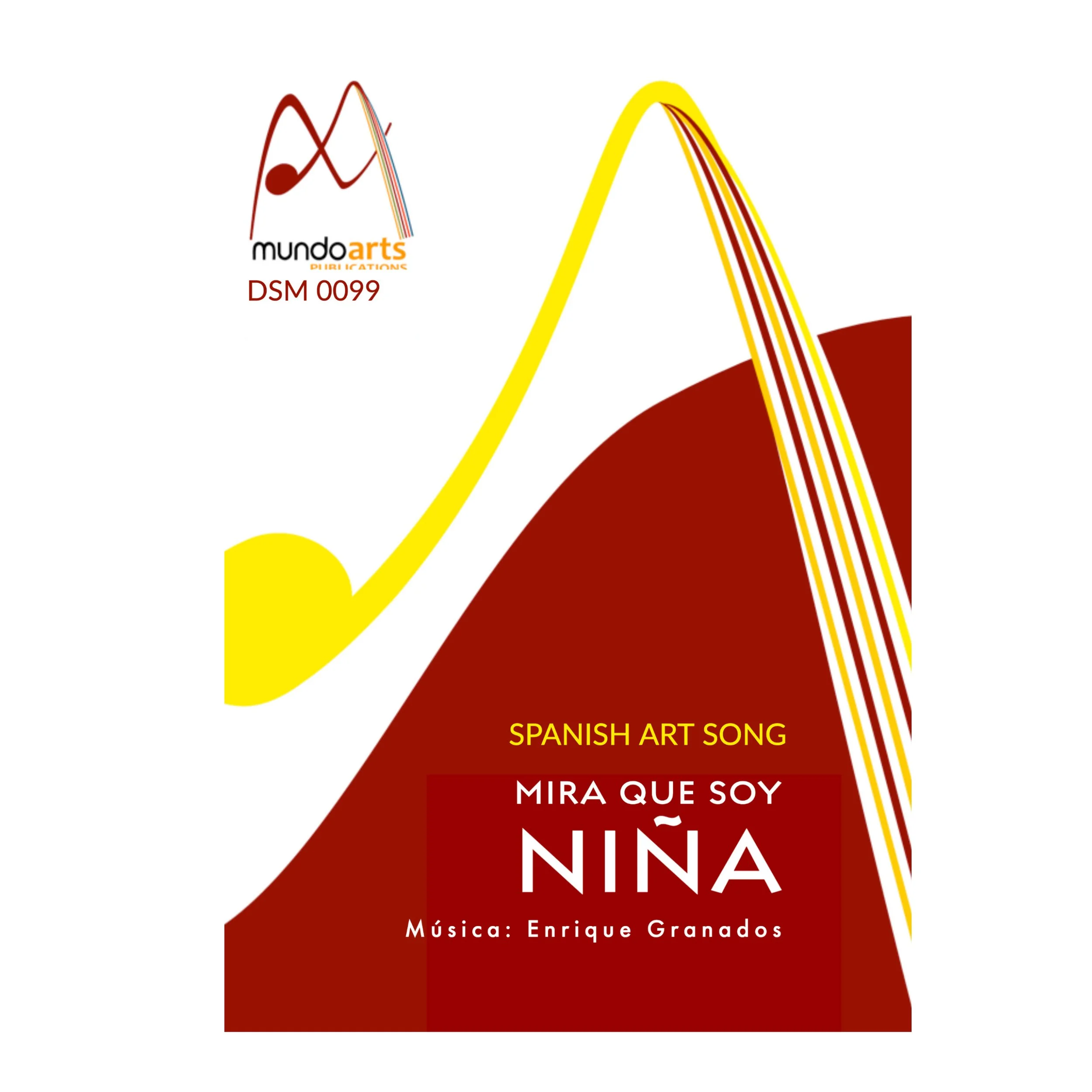
Mira que soy niña, amor, déjame (See That I Am Young, Love, Leave Me Be) is a Spanish art song for voice and piano by Enric Granados (1867–1916), setting an anonymous Spanish poetic text. The song belongs to his cycle Canciones amatorias, which draws on the tradition of early Spanish love poetry.
The poem presents a young woman addressing a persistent admirer, asking him to respect her youth and refrain from pursuing her. Its direct language combines playful resistance with an increasingly dramatic expression of distress, particularly in the recurring exclamation “¡Ay, ay, ay, que me moriré!”
Marked Allegro, the song begins in 6/8 with an animated piano introduction featuring flowing figures and chromatic inflections. The vocal writing alternates between lyrical declamation and expressive exclamations, supported by changing meters, contrasting Meno sections, and passages marked con dolor and con gracia (amoroso). Repeated vocal material and energetic piano interludes create a theatrical dialogue between the singer and accompaniment.
The composition combines rhythmic vitality, dramatic expression, and Granados's characteristic harmonic flexibility.
Listen to a recording: Victoria de los Ángeles, soprano, and Alicia de Larrocha, piano — Spotify.