 Image 1 of 2
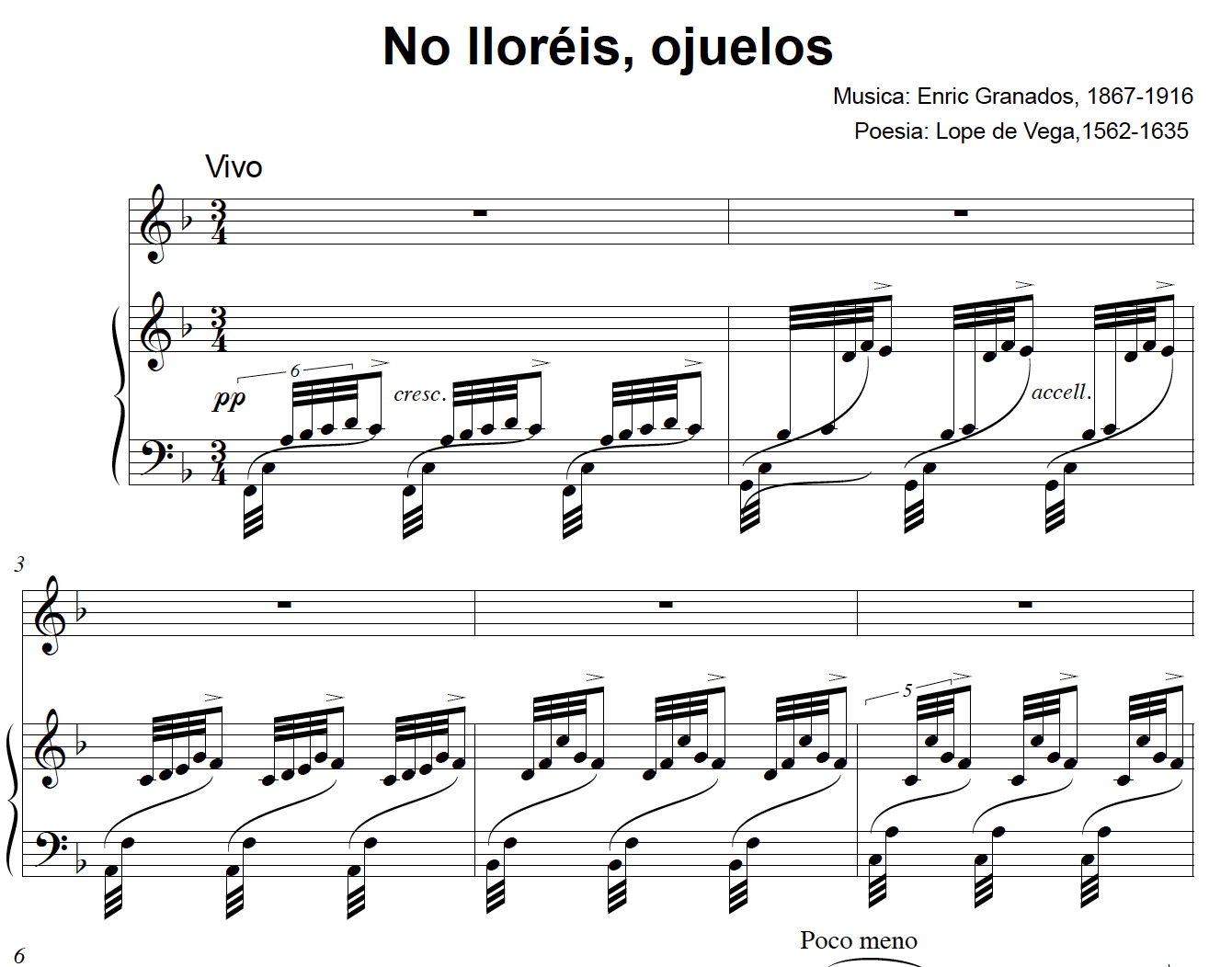 Image 2 of 2
No lloréis, ojuelos (Do Not Weep, Little Eyes) is a Spanish art song for voice and piano by Enric Granados (1867–1916), from his cycle Canciones amatorias. It sets poetry by Lope de Vega (1562–1635), one of the leading playwrights and poets of the Spanish Golden Age.
The poem addresses a beloved's tearful eyes, suggesting that jealousy should not bring sorrow when love itself possesses the power to wound. Its concise verses combine tenderness, wit, and the emotional contradictions of romantic love.
Marked Vivo and written in 3/4 meter, the song opens with an energetic piano introduction featuring rapid repeated figures and rhythmic accents. The lyrical vocal line enters Poco meno, unfolding over a continuous, animated accompaniment. Chromatic inflections, expressive melismas, and subtle tempo changes reinforce the poem's emotional contrasts. A return to the opening vocal material brings the song to a decisive conclusion.
The composition combines the elegance of Spanish Golden Age poetry with Granados's rhythmic vitality and expressive piano writing.
Listen to a recording: Victoria de los Ángeles, soprano, and Alicia de Larrocha, piano — Spotify.