 Image 1 of 2
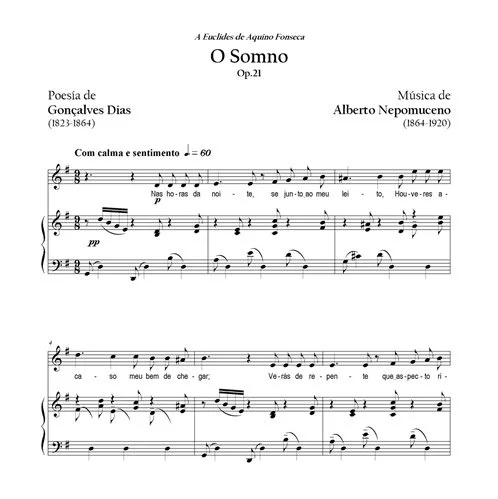 Image 2 of 2
O Somno (Sleep), Op. 21, No. 1, composed in 1901, is a Brazilian art song for voice and piano by Alberto Nepomuceno (1864–1920), a pioneer of Brazilian musical nationalism and an advocate for Portuguese-language vocal music. The text is by Gonçalves Dias (1823–1864), a central figure of Brazilian literary Romanticism whose poetry explores love, nature, national identity, and human emotion.
The poem expresses the intimacy of love through the imagery of sleep and dreams. The speaker imagines the beloved approaching during the night, transforming sleep into an experience of affection and happiness. References to angels and celestial harps associate earthly love with heavenly bliss.
Marked Com calma e sentimento, the composition opens in 9/8 meter, with a gently rocking piano accompaniment supporting a predominantly syllabic vocal melody. Chromatic harmonies and expressive dynamic contrasts enrich the lyrical writing. A concluding Largamente section intensifies the emotional expression before returning to the initial tempo and a quiet ending.
Listen to a recording: Anna Maria Kieffer, mezzo-soprano, and Achille Picchi, piano — 23 Canções de Alberto Nepomuceno, song No. 9 (YouTube).