 Image 1 of 2
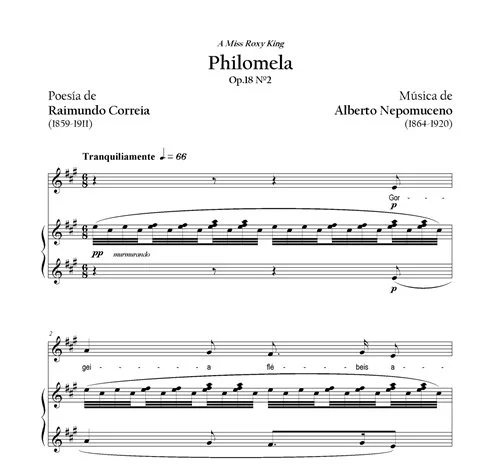 Image 2 of 2
Philomela (The Nightingale), Op. 18, No. 2, is a Brazilian art song for voice and piano composed in 1899 by Alberto Nepomuceno (1864–1920), a pioneer of Brazilian musical nationalism and Portuguese-language vocal music. The poem is by Raimundo Correia (1859–1911), a prominent Brazilian Parnassian poet whose work combines formal precision, natural imagery, and philosophical reflection.
The poem celebrates the nightingale's song through images of lakes, birds, flowers, sunlight, and flowing water. The peaceful landscape gradually gives way to a scene of danger, contrasting innocence with cruelty. The reference to Nimrod, the biblical hunter, introduces a symbolic dimension to the poem.
Beginning Tranquilamente, the composition features continuous piano figurations that evoke birdsong and the movement of water. The vocal writing alternates between lyrical phrases, recitative-like passages, and dramatic declamation. Chromatic harmonies, changing tonal areas, trills, and extensive dynamic contrasts contribute to its expressive development. The concluding Alegre section culminates in expansive vocal phrases and virtuosic piano writing.
Listen to a recording: Filomela — Alberto Nepomuceno, Canções I, track 7 — Selo Minas de Som, Federal University of Minas Gerais.