 Image 1 of 2
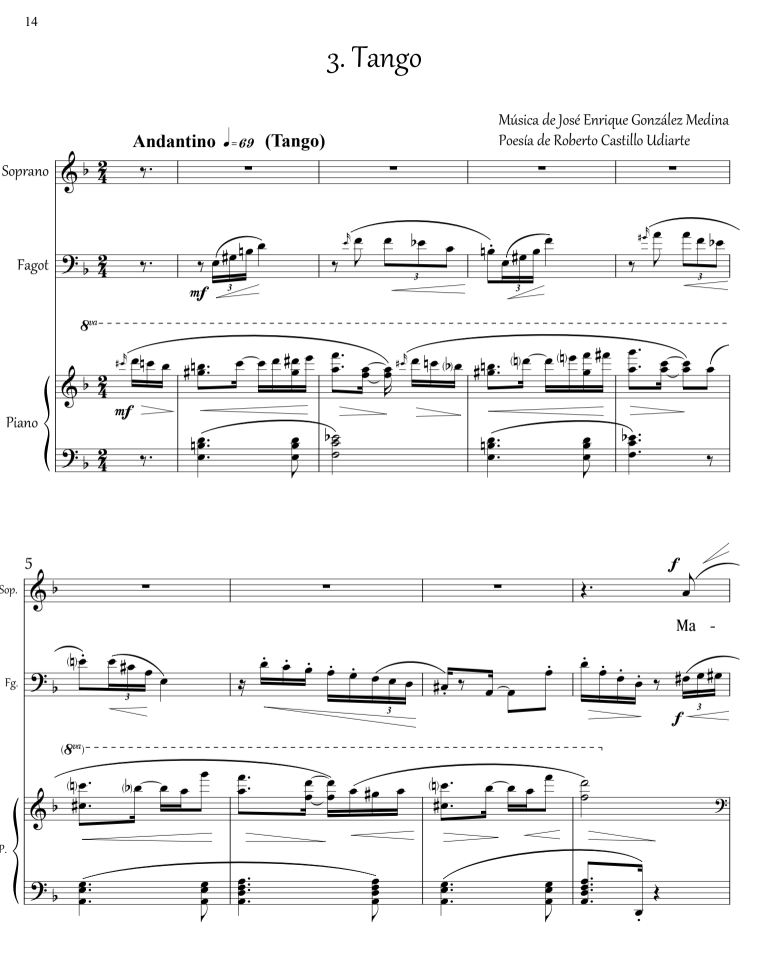 Image 2 of 2
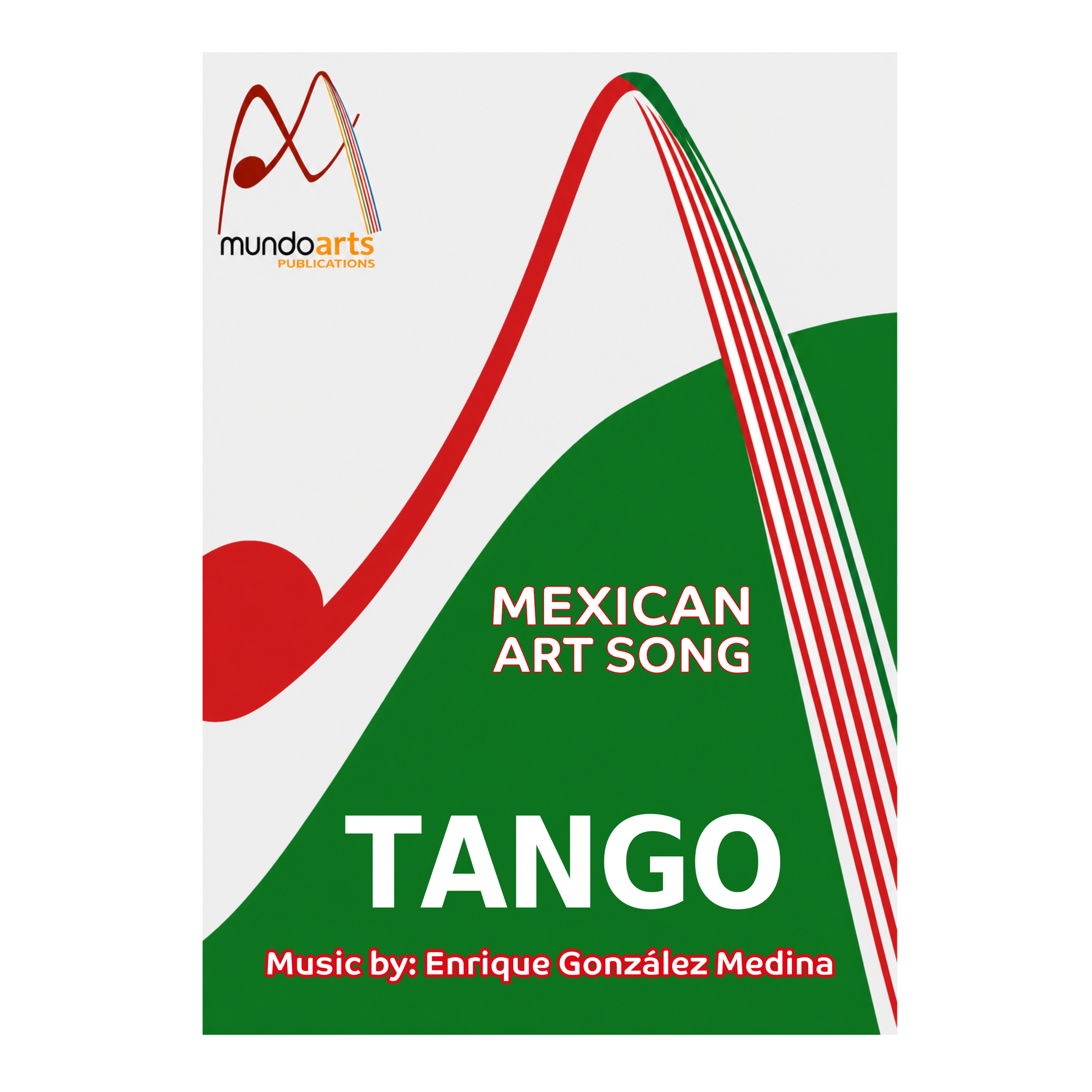
Tango is the third song from José Enrique González Medina's Cinco canciones tijuanenses, a cycle inspired by the people, places, and urban atmosphere of Tijuana. Set to a poem by Roberto Castillo Udiarte, the work is written for soprano, bassoon, and piano and transforms the traditional tango into a contemporary reflection on memory, solitude, and city life.
The poem unfolds through a series of vivid urban images: cold coffee, worn shoes, greasy trousers, electricity bills, closed shops, sleepless nights, and the search for a missing book. These fragments of everyday life gradually reveal an emotional landscape marked by silence, waiting, and quiet resilience. Rather than telling a linear story, the text creates an intimate portrait of existence in the modern city, where ordinary objects become symbols of longing and hope.
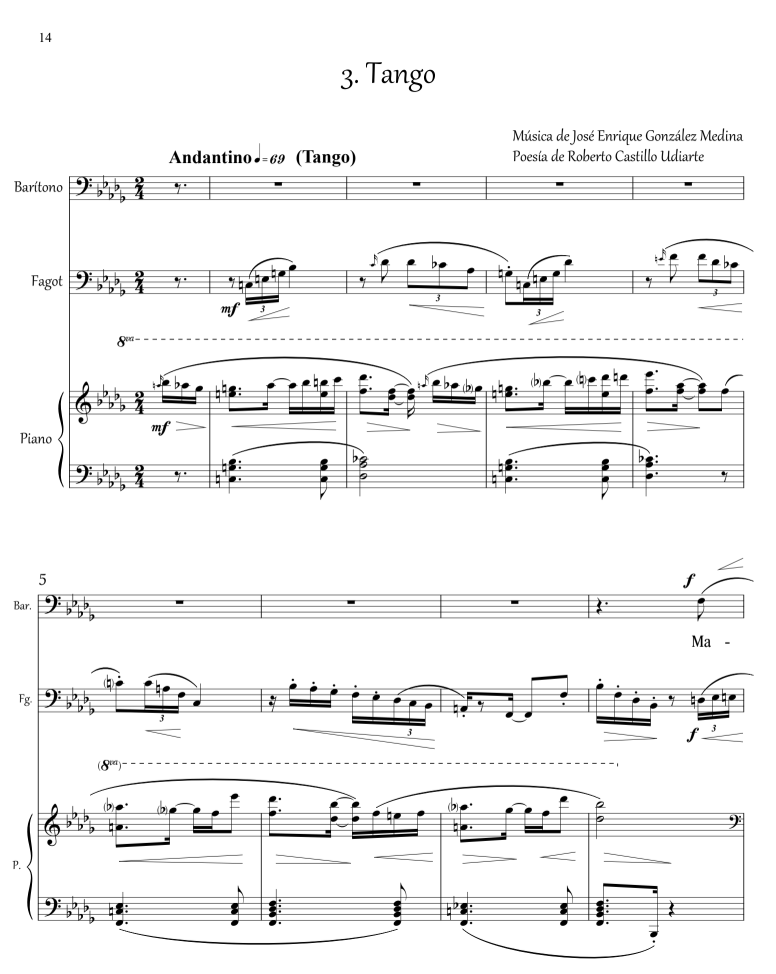
González Medina captures this atmosphere through the characteristic rhythm and expressive gestures of the tango while expanding its language with contemporary harmonies and changing tonal colors. The bassoon becomes an equal musical partner, weaving melodic lines that converse with the soprano throughout the work. Contrasting Andantino and Adagio sections create moments of reflection before the opening tango rhythm returns, bringing the song to a quiet and evocative conclusion.
Instrumentation: Soprano, Bassoon, and Piano
Voice Type: Soprano
Language: Spanish
Composer: José Enrique González Medina (Mexico)
Poet: Roberto Castillo Udiarte
Collection: Cinco canciones tijuanenses
Tango is the third song from José Enrique González Medina's Cinco canciones tijuanenses, a cycle inspired by the people, places, and urban atmosphere of Tijuana. Set to a poem by Roberto Castillo Udiarte, the work is written for soprano, bassoon, and piano and transforms the traditional tango into a contemporary reflection on memory, solitude, and city life.
The poem unfolds through a series of vivid urban images: cold coffee, worn shoes, greasy trousers, electricity bills, closed shops, sleepless nights, and the search for a missing book. These fragments of everyday life gradually reveal an emotional landscape marked by silence, waiting, and quiet resilience. Rather than telling a linear story, the text creates an intimate portrait of existence in the modern city, where ordinary objects become symbols of longing and hope.
González Medina captures this atmosphere through the characteristic rhythm and expressive gestures of the tango while expanding its language with contemporary harmonies and changing tonal colors. The bassoon becomes an equal musical partner, weaving melodic lines that converse with the soprano throughout the work. Contrasting Andantino and Adagio sections create moments of reflection before the opening tango rhythm returns, bringing the song to a quiet and evocative conclusion.
Instrumentation: Soprano, Bassoon, and Piano
Voice Type: Soprano
Language: Spanish
Composer: José Enrique González Medina (Mexico)
Poet: Roberto Castillo Udiarte
Collection: Cinco canciones tijuanenses