 Image 1 of 2
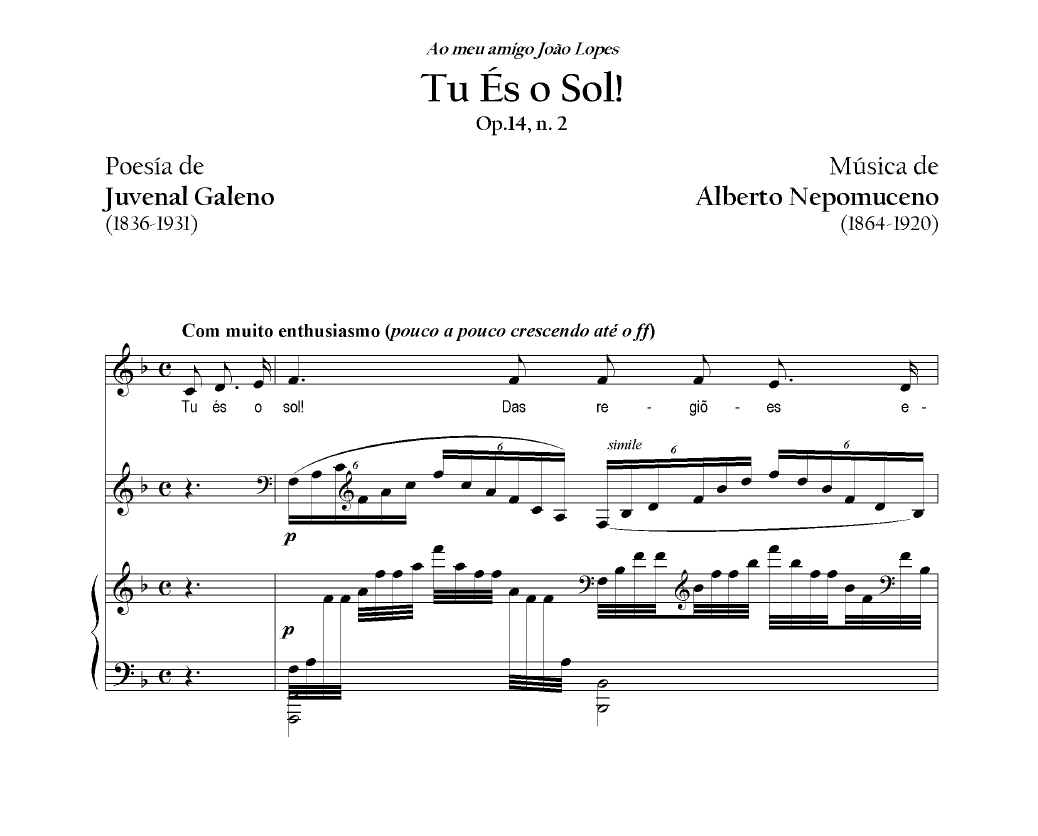 Image 2 of 2
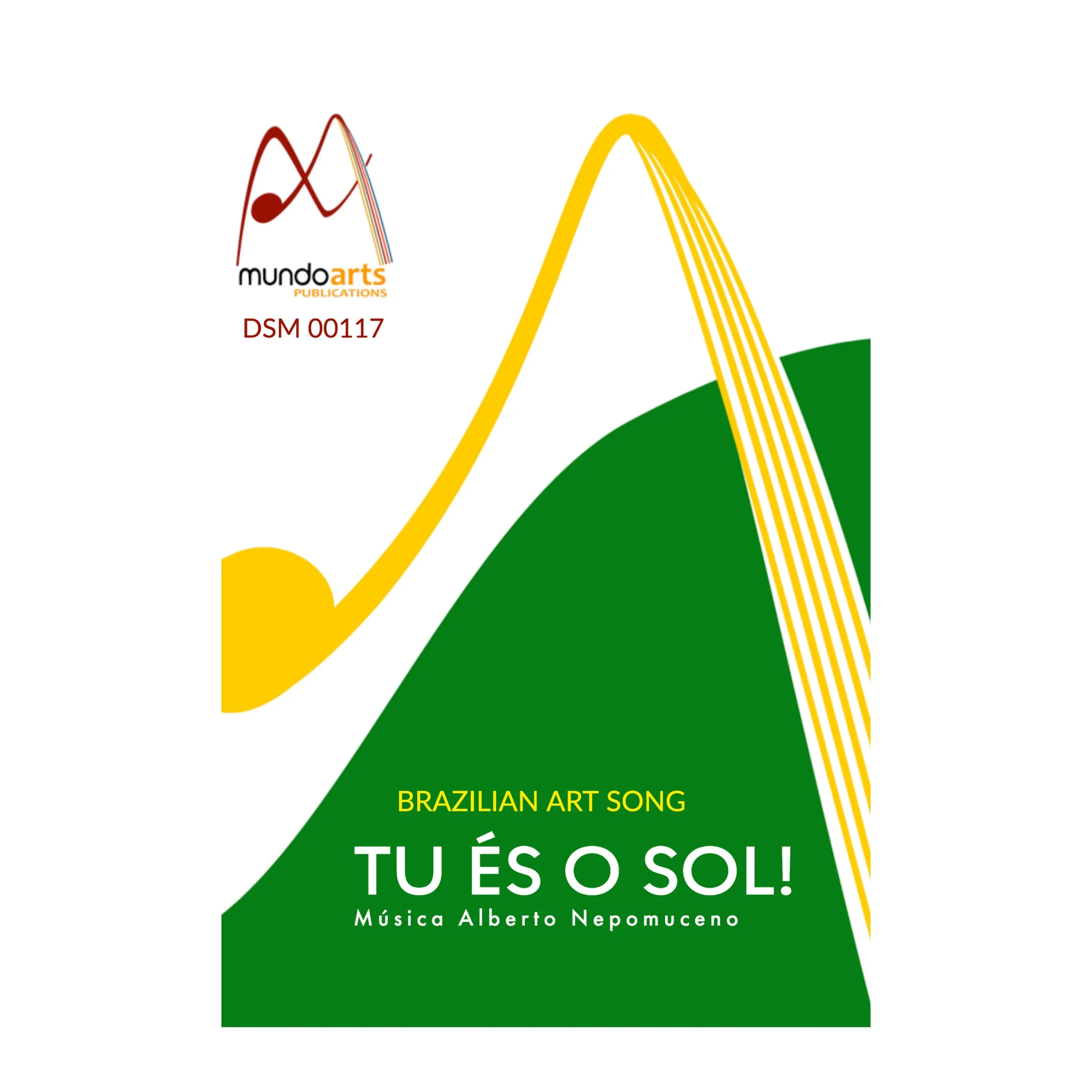
Tu és o sol! (You Are the Sun!), Op. 14, No. 2, is a Brazilian art song for voice and piano composed in Paris in 1894 by Alberto Nepomuceno (1864–1920), a pioneer of Brazilian musical nationalism and Portuguese-language vocal music. The text is by Juvenal Galeno (1836–1931), a Brazilian Romantic poet from Ceará whose literary work was closely connected to the popular traditions and cultural identity of northeastern Brazil.
The poem celebrates the transformative power of love. The beloved is compared to the sun, whose warmth and light revive the speaker, initially portrayed as a frozen, abandoned plant. The image of a sunflower turning toward the sun symbolizes devotion, gratitude, and emotional renewal.
Written in F major and marked Com muito enthusiasmo, the composition features an expansive vocal melody supported by virtuosic piano writing, continuous arpeggios, chromatic harmonies, and progressive dynamic intensification. A contrasting central section reflects the speaker's initial desolation before the return of the opening material. A passionate vocal climax and a brilliant piano postlude conclude the work.
Listen to a recording: André Vidal, tenor, and Gisele Pires Mota, piano — YouTube.