 Image 1 of 2
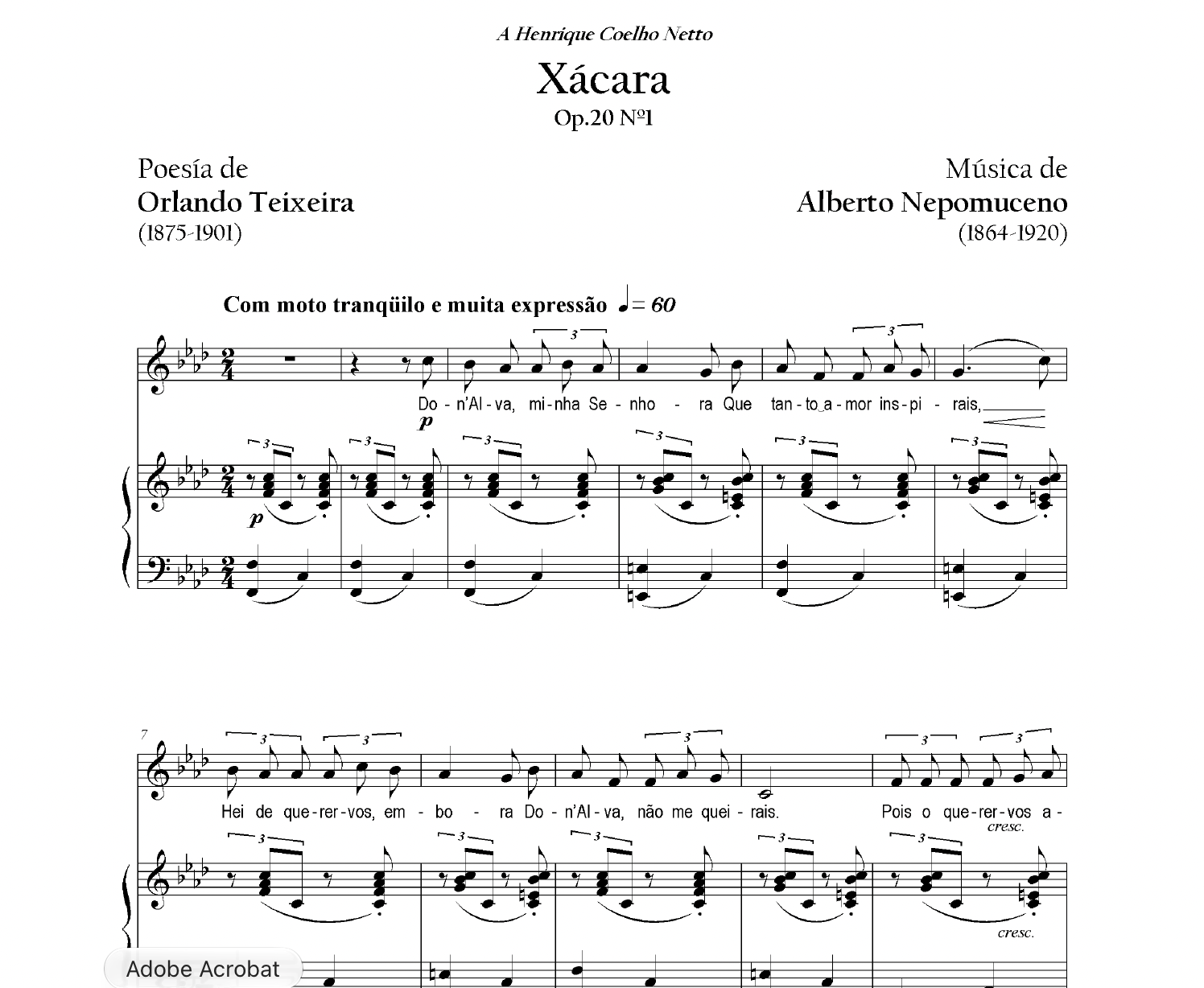 Image 2 of 2
Xácara (Ballad), Op. 20, No. 1, is a Brazilian art song for voice and piano composed in Petrópolis in 1899 by Alberto Nepomuceno (1864–1920), a pioneer of Brazilian musical nationalism and Portuguese-language vocal music. The text is by Orlando Teixeira (1875–1901), a Brazilian poet whose verses also inspired Nepomuceno's Oração do Diabo, Op. 20, No. 2.
The poem expresses devotion to Dona Alva, a woman who does not reciprocate the speaker's love. Its courtly language combines admiration, longing, and resignation. Images of dawn and darkness highlight the contrast between the beloved's beauty and the speaker's emotional suffering.
Marked Com moto tranquilo e muita expressão, the composition features a lyrical vocal melody, recurring piano figures, chromatic harmonies, and a rhythmic interplay between binary and ternary subdivisions evocative of Brazilian popular music. The return of the opening material reinforces the poem's recurring address to the beloved, while an extended wordless vocalise brings the song to an expressive conclusion.
Listen to a recording: Anna Maria Kieffer, mezzo-soprano, and Achille Picchi, piano — YouTube.