 Image 1 of 2
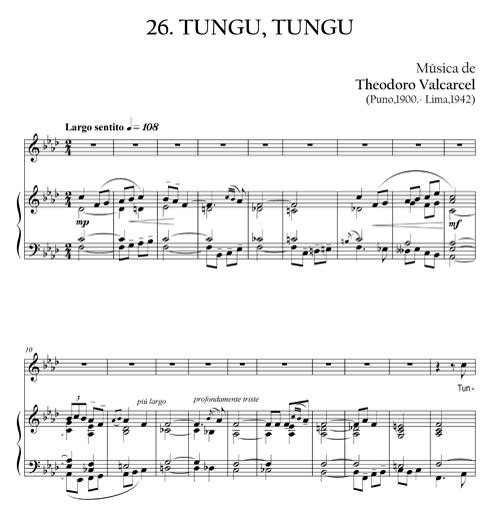 Image 2 of 2
Tungu, Tungu by Peruvian composer Theodoro Valcárcel is a song for voice and piano based on a Quechua text that expresses tenderness, sorrow, and concern through imagery drawn from the natural world. Addressing a dove, the poetic voice asks why it is sad, evoking the transformation of sunlight into clouds and the image of a flower illuminating the fields. The contrast between light and darkness reflects an intimate dialogue shaped by longing and consolation.
The composition opens with an extended piano introduction marked Largo sentito, characterized by sustained harmonies, chromatic inflections, and interweaving melodic lines. The expressive indications più largo and profondamente triste establish a contemplative atmosphere before the voice enters with the recurring invocation “Tungu, tungu.” The vocal writing combines repeated melodic gestures with broader lyrical phrases, while the piano alternates between chordal support and independent melodic activity. A contrasting section introduces a lighter, more flowing texture marked leggero, before the return of the principal vocal material.
Through its combination of Quechua poetry and expressive musical writing, Tungu, Tungu brings together Andean cultural imagery and Valcárcel’s distinctive approach to art song. The work invites performers to explore the relationship between the text’s intimate emotional expression and the contrasting musical textures.