 Image 1 of 2
 Image 2 of 2
Yraka Küya-wi (No llores mujer) by Peruvian composer Theodoro Valcárcel draws on the Kampa Indigenous musical tradition. The song juxtaposes its original-language text with a Spanish translation, expressing consolation through the recurring plea not to cry.
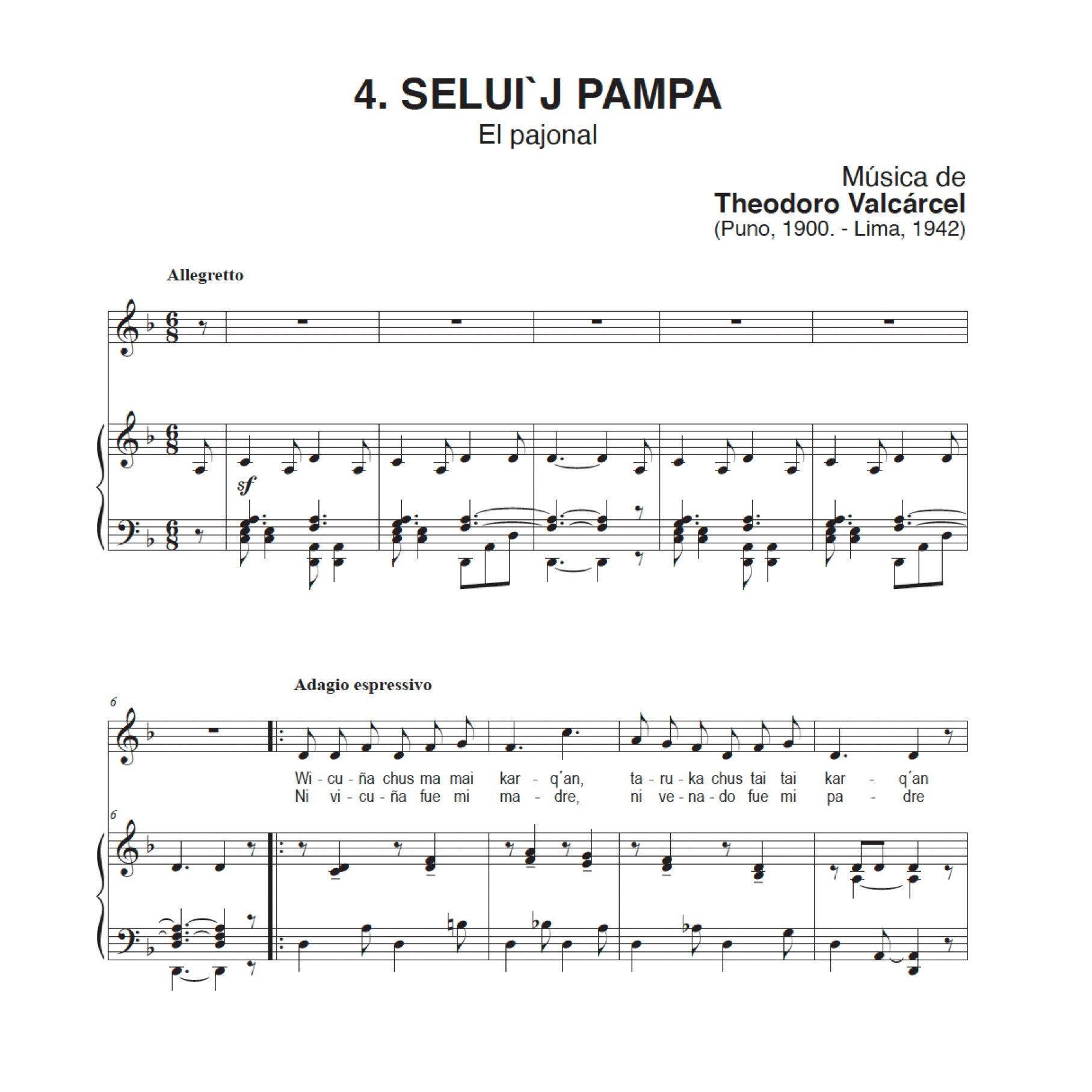
The vocal line unfolds through short, rhythmically articulated phrases and repeated melodic figures, while the piano provides shifting harmonic textures that alternate between restrained accompaniment and more expressive passages. Changes in tempo, including Adagio and Moderato, together with indications such as cantabile, molto tenuto, and un poco sostenuto, shape the work's contrasting expressive episodes. The return of the opening material provides structural unity, while the final passage moves toward a more sustained and reflective conclusion.
The song invites an interpretation attentive to the natural inflection of the text, rhythmic precision, and the balance between its direct melodic gestures and changing harmonic colors.