Al menudo is the fifth and final song of José Enrique González Medina's Cinco canciones tijuanenses, setting a sonnet by the Mexican poet Facundo Bernal López (1883–1962) for baritone, bassoon, and piano. Written in a lively, conversational style, the work celebrates one of northern Mexico's most emblematic traditional dishes as a symbol of regional identity, hospitality, and cultural pride.
The poem begins by praising the nourishing comfort of menudo, describing it as the perfect remedy at daybreak and a beloved companion after celebration. What starts as a humorous tribute gradually becomes a declaration of affection for the land of Sonora itself. The poet affirms that no one could take away this cherished tradition because it reflects the spirit of the region and its people. The sonnet concludes with a joyful toast to the ingredients that define the dish—caldo, pata, maíz, tripas y panzas—turning everyday food into a celebration of local heritage.
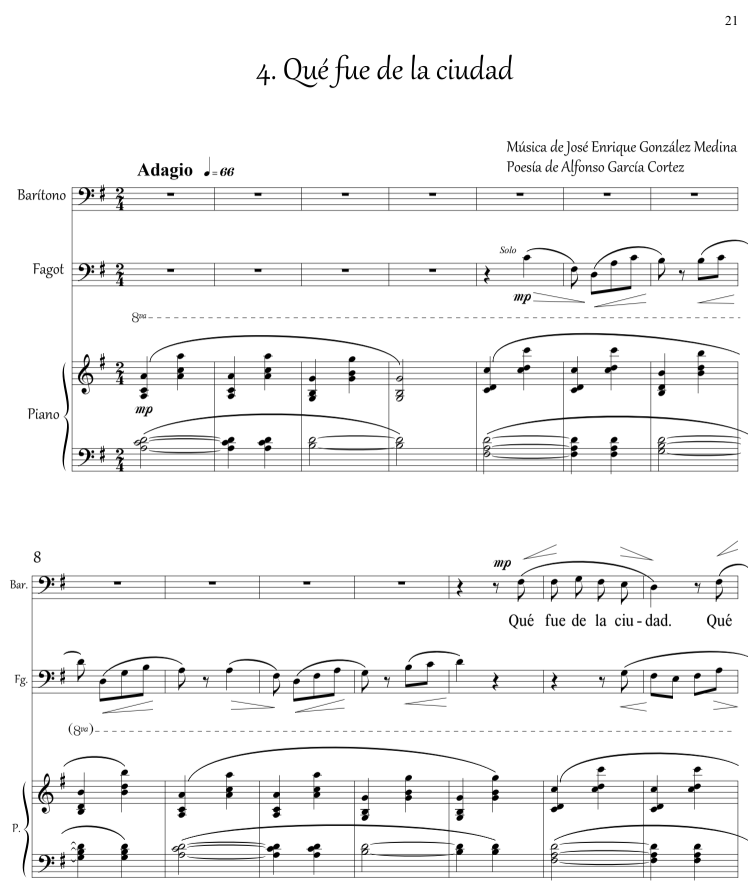
González Medina matches the wit and warmth of the text with energetic rhythms, colorful harmonic shifts, and a lively dialogue between the baritone and the bassoon. Contrasting sections marked Andante and Adagio provide moments of reflection before the music returns to its exuberant character, culminating in an exuberant final refrain. The bassoon acts as both partner and commentator, reinforcing the song's playful spirit while enriching its chamber music texture.
Instrumentation: Baritone, Bassoon, and Piano
Voice Type: Baritone
Language: Spanish
Composer: José Enrique González Medina (Mexico)
Poet: Facundo Bernal López (1883–1962)
Collection: Cinco canciones tijuanenses
Al menudo is the fifth and final song of José Enrique González Medina's Cinco canciones tijuanenses, setting a sonnet by the Mexican poet Facundo Bernal López (1883–1962) for baritone, bassoon, and piano. Written in a lively, conversational style, the work celebrates one of northern Mexico's most emblematic traditional dishes as a symbol of regional identity, hospitality, and cultural pride.
The poem begins by praising the nourishing comfort of menudo, describing it as the perfect remedy at daybreak and a beloved companion after celebration. What starts as a humorous tribute gradually becomes a declaration of affection for the land of Sonora itself. The poet affirms that no one could take away this cherished tradition because it reflects the spirit of the region and its people. The sonnet concludes with a joyful toast to the ingredients that define the dish—caldo, pata, maíz, tripas y panzas—turning everyday food into a celebration of local heritage.
González Medina matches the wit and warmth of the text with energetic rhythms, colorful harmonic shifts, and a lively dialogue between the baritone and the bassoon. Contrasting sections marked Andante and Adagio provide moments of reflection before the music returns to its exuberant character, culminating in an exuberant final refrain. The bassoon acts as both partner and commentator, reinforcing the song's playful spirit while enriching its chamber music texture.
Instrumentation: Baritone, Bassoon, and Piano
Voice Type: Baritone
Language: Spanish
Composer: José Enrique González Medina (Mexico)
Poet: Facundo Bernal López (1883–1962)
Collection: Cinco canciones tijuanenses

 Image 1 of 2
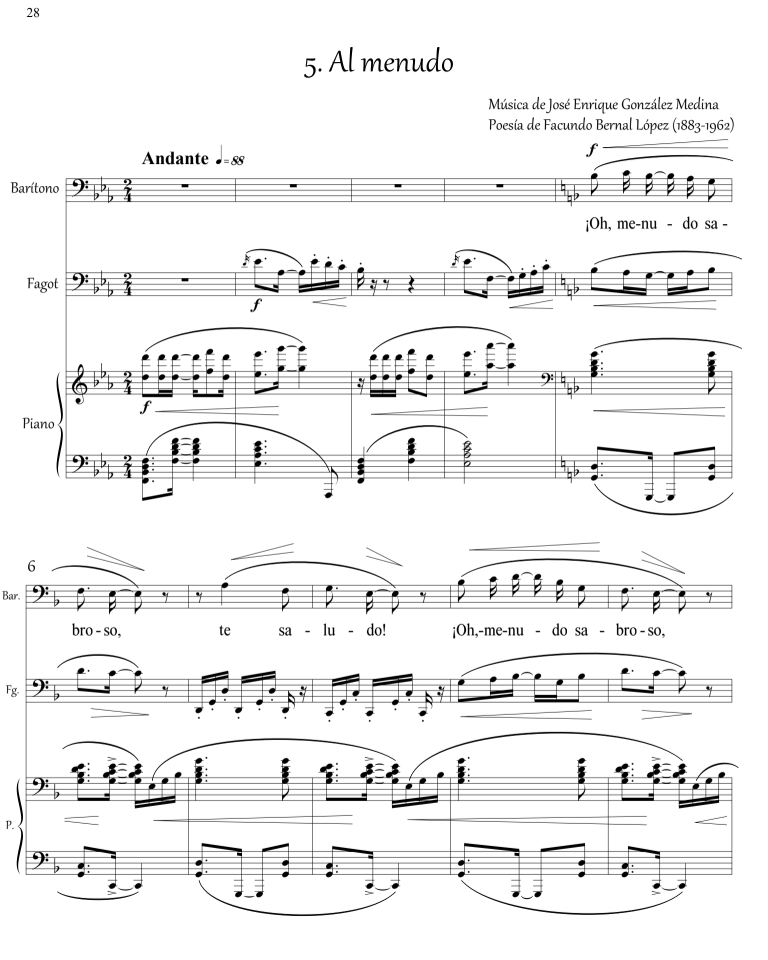 Image 2 of 2