 Image 1 of 2
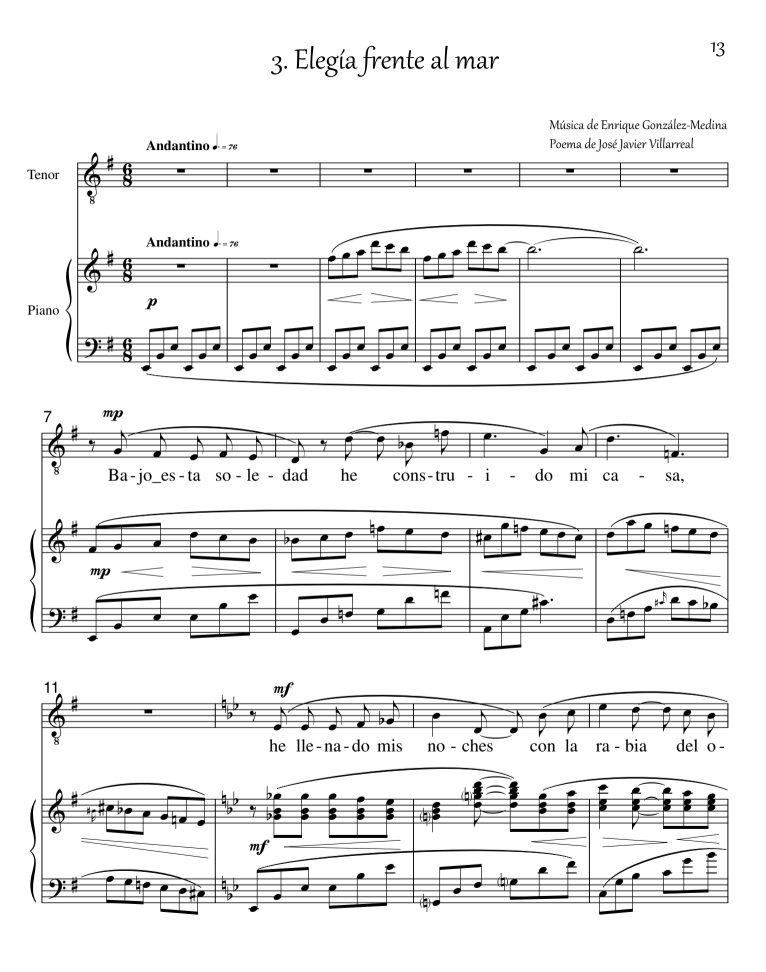 Image 2 of 2
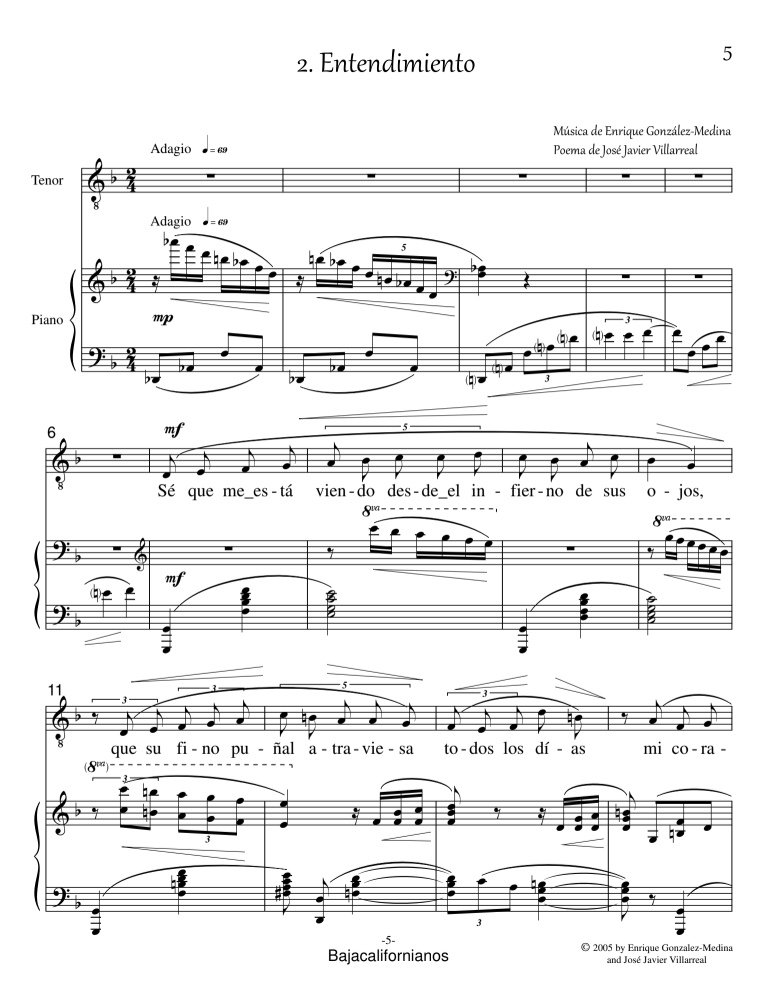
Elegía frente al mar* is a Mexican art song for tenor and piano composed by Enrique González-Medina, with a Spanish-language poem by José Javier Villarreal. Written in 2005, it is the third song in the cycle Bajacalifornianos.
The poem is an introspective meditation on solitude, memory, guilt, and redemption. Standing before the sea, the speaker reflects on the wounds of the past, confronting images of violence, remorse, fear, and death before arriving at a quiet acceptance of inner silence. The sea becomes both witness and metaphor, framing a deeply personal journey of self-examination.
The music mirrors the emotional landscape of the poem through expressive harmonic shifts, changing tonal centers, and a piano part that plays an active narrative role. Alternating between flowing Andantino sections and reflective Adagio passages, the work combines lyrical vocal writing with dramatic declamation, creating a continuous dialogue between voice and piano. Rich chromaticism and contrasting textures give the song its emotional depth while preserving the clarity of the text.
Written for tenor, the piece is suitable for a high male voice. Its wide expressive range, rhythmic flexibility, and close collaboration between singer and pianist make it especially appropriate for advanced performers.
Instrumentation: Tenor and piano
Language: Spanish
Voice type: High voice (Tenor)
Composer: Enrique González-Medina
Poet: José Javier Villarreal
Country: Mexico
Genre: Mexican art song
Elegía frente al mar* is a Mexican art song for tenor and piano composed by Enrique González-Medina, with a Spanish-language poem by José Javier Villarreal. Written in 2005, it is the third song in the cycle Bajacalifornianos.
The poem is an introspective meditation on solitude, memory, guilt, and redemption. Standing before the sea, the speaker reflects on the wounds of the past, confronting images of violence, remorse, fear, and death before arriving at a quiet acceptance of inner silence. The sea becomes both witness and metaphor, framing a deeply personal journey of self-examination.
The music mirrors the emotional landscape of the poem through expressive harmonic shifts, changing tonal centers, and a piano part that plays an active narrative role. Alternating between flowing Andantino sections and reflective Adagio passages, the work combines lyrical vocal writing with dramatic declamation, creating a continuous dialogue between voice and piano. Rich chromaticism and contrasting textures give the song its emotional depth while preserving the clarity of the text.
Written for tenor, the piece is suitable for a high male voice. Its wide expressive range, rhythmic flexibility, and close collaboration between singer and pianist make it especially appropriate for advanced performers.
Instrumentation: Tenor and piano
Language: Spanish
Voice type: High voice (Tenor)
Composer: Enrique González-Medina
Poet: José Javier Villarreal
Country: Mexico
Genre: Mexican art song